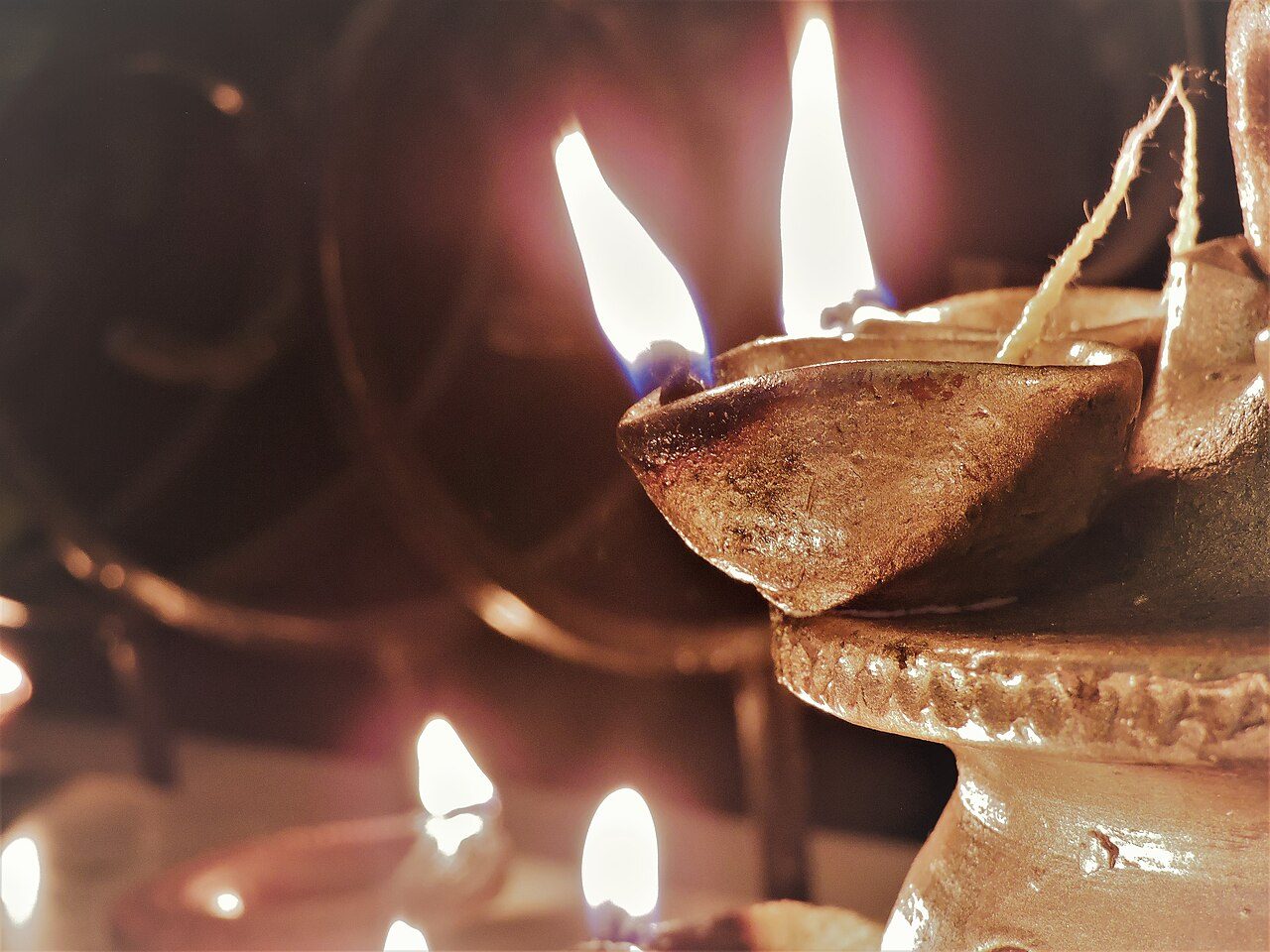
In 2017 the Uttar Pradesh government lit 51,000 diyas along the Saryu for the first Deepotsav in Ayodhya. By 2022 the target was 14 lakh. In August that year PTI went to the villages supplying them. A potter named Raju said, "We got one-rupee per diya last year. But this time I think we should get at least Rs 1.50." Rajesh Kumar Prajapati said his village, Jaisinghpur, about 40 potter families, had supplied five or six lakh diyas the year before, and that he had been paid ₹1.20 a piece.
That is a bulk government order, and bulk orders pay the least. It still shows the scale of the trade. The diya is the handmade object most Indian households buy at least once a year, and it sells for less than any other piece of craft this site writes about, which makes it a useful test of any argument about what handmade work should cost.
The arithmetic of a rupee
Retail prices are higher and still small. In Guwahati in 2024, The Hills Times found sellers asking ₹4 to ₹5 for lamps that had cost ₹2 to ₹3, and blaming clay, transport and labour. In Sirsa in 2025, The Tribune found diyas selling for ₹5 to ₹50, and a potter making about 2,000 a day in season.
Taking the two reports together gives a rough illustration. Two thousand diyas at the Ayodhya rate of ₹1.20 comes to ₹2,400 for a day at the wheel. From that the potter pays for clay, for fuel for firing and for the diyas that crack in the kiln, and the family members who knead, dry and stack the diyas are paid out of the same sum. Orders of this size come once a year. The diya season lasts a few weeks, and the rest of the year has to be made up from pots, kulhads and whatever else sells.
What the government says it has changed
The Khadi and Village Industries Commission gives potters electric wheels, first under the Kumhar Sashaktikaran Yojana and now under the Gramodyog Vikas Yojana. In a July 2020 release it said the average income of potters under the scheme had gone up "from nearly Rs 3,000 per month to nearly Rs 12,000 per month". That figure came from KVIC itself, about 100 potters in Gandhinagar district were the occasion, and we found no independent evaluation of it.
The clay is running out before the customers are
Potters have always dug their clay from village ponds and riverbanks. In Bihar, India Water Portal reported in April 2025 that silt had buried the good clay along the Bagmati and that ponds had dried up or been polluted. Ganga Devi was buying hers at ₹1,400 a trailer load. Parmeshwar Pandit put the problem in one sentence: "We buy soil, prepare the mud, give it shape, fire it, and after all that, we sell it at very low prices."
The Tribune's Sirsa report gave the result in numbers. About 150 to 200 families worked as potters there a decade ago. Fewer than 80 do now, and the potters it spoke to blamed the shortage of clay and firewood as much as a lack of buyers.
What the argument about Chinese lights leaves out
Each October the diya is used in arguments about trade with China. In 2020 the Rashtriya Kamdhenu Aayog announced a target of 33 crore cow-dung diyas to compete with Chinese lights. The Confederation of All India Traders publishes a Diwali sales estimate each year, ₹4.75 lakh crore for 2025 against ₹1.25 lakh crore in 2021, and said in October 2025 that "Chinese products are virtually absent from the market". CAIT bases these figures on a survey of trade associations in 35 cities and publishes no method a reader could check. They are advocacy figures and should be read that way.
The trade data is less dramatic. In 2023 India imported US$462 million of lamps and lighting fittings, 78 per cent of it from China, according to UN Comtrade figures compiled by TrendEconomy. That category covers every lamp and light fitting, so it overstates the decorative trade, and it says nothing about 2025. It does show that Chinese lighting had not vanished from Indian shops the year before CAIT's claim.
In our view the boycott framing does little for potters. It turns the diya into a patriotic symbol and leaves its price, a rupee or two, where it was. The potter's problems are the cost and scarcity of clay and fuel, a selling season of a few weeks, and a price that has barely moved. Buying fewer LED lights changes none of these.
The terracotta that carries a name
A few terracotta traditions are protected by a Geographical Indication. Gorakhpur Terracotta in Uttar Pradesh was registered in April 2020 (application No. 619), with 162 authorised users on the register. Bankura Panchmura Terracotta from West Bengal, the craft of the Bankura horse, was registered in March 2018 (No. 453). Khurja Pottery (No. 178, 2015) is glazed ceramic, a different craft from terracotta. A GI records where a thing comes from. It says nothing about whether the potter was paid well, and our essay on GI tags explains what else it leaves out.
What a buyer can do
Buy diyas from a potter or from a stall that buys from one, and pay the asking price; bargaining a diya down from ₹2 takes money out of a very thin margin. A fired diya can be washed and lit again the following year, so a set worth keeping, such as a painted Gorakhpur piece or a heavier lamp, is a better purchase at a price that covers the clay. Potters sell all year. A matka bought in April or a set of kulhads bought in July helps a potter more than a hundred diyas bought in the last week of October.
Sources
- PTI via ThePrint, "Hurry potters, 14 lakh 'diyas' needed for Ayodhya Deepotsava in two months", 24 August 2022
- The Hills Times, Guwahati, 26 October 2024
- The Tribune, "For Sirsa potters, every diya sold lights ray of hope", 16 October 2025
- India Water Portal, on Bihar's clay artisans, 16 April 2025
- PIB, KVIC on potters' incomes, 24 July 2020 and PIB, KVIC wheel distribution in Telangana, 4 September 2024
- CAIT press release, 3 October 2025
- Deccan Herald, on the 33 crore cow-dung diyas, 2020
- TrendEconomy, India's imports of HS 9405, from UN Comtrade
- GI registry: Gorakhpur Terracotta, No. 619, Bankura Panchmura Terracotta, No. 453, Khurja Pottery, No. 178