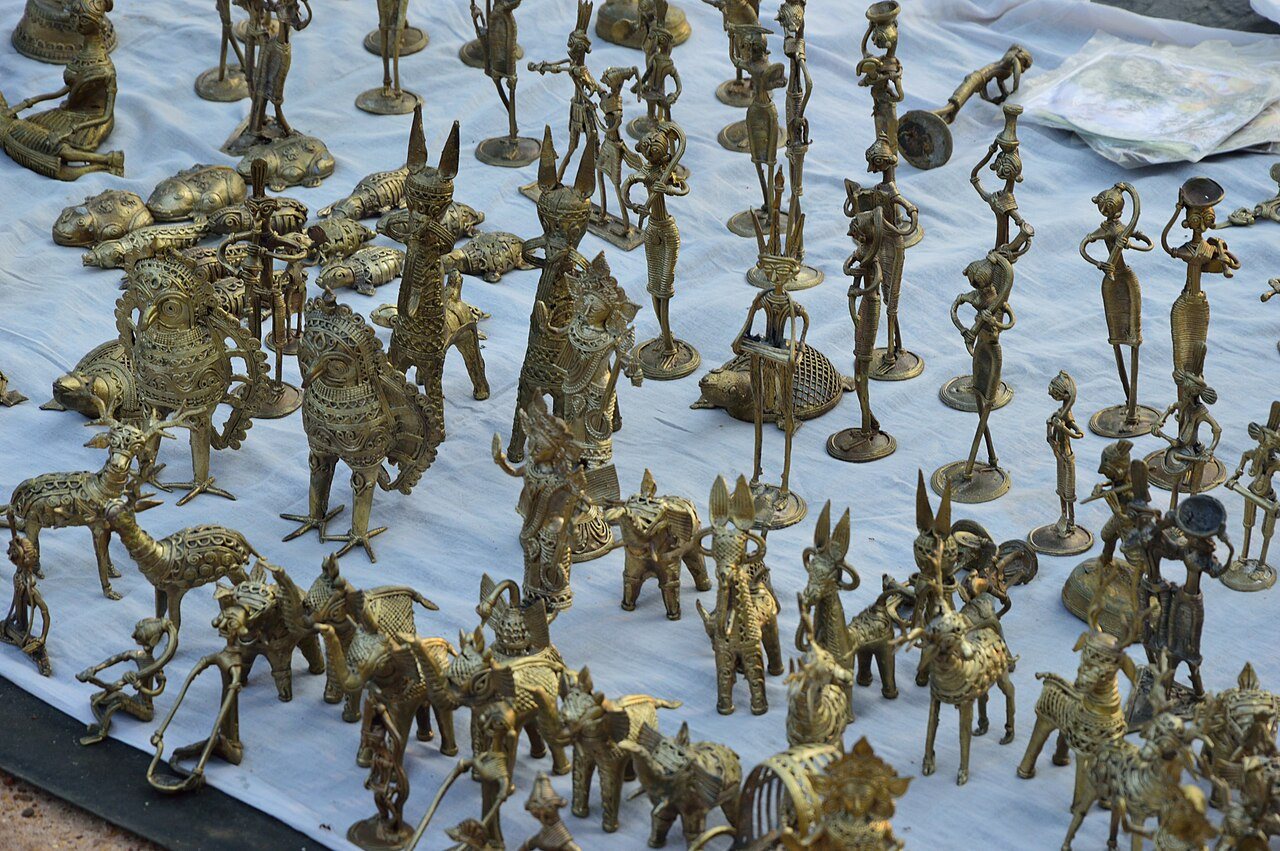
The words "artisan", "handcrafted", "handmade" and "empowering women artisans" on a listing are written by the seller. They are marketing language, and a buyer usually has no way to check them from the listing alone. Two kinds of check exist in India, and each covers only part of the question.
The first is the law on false description. Section 2(28) of the Consumer Protection Act, 2019 defines a misleading advertisement as one that "falsely describes such product or service" or "deliberately conceals important information". According to the Press Information Bureau, the Central Consumer Protection Authority set up under the Act can impose a penalty of up to ₹10 lakh for a misleading advertisement and up to ₹50 lakh for a later one. A listing that calls machine-made goods handmade fits that wording. The law acts through complaints and penalties after a listing is live, so the buyer still has to notice the false claim first.
The second is certification. Geographical Indication registration under the Geographical Indications of Goods (Registration and Protection) Act, 1999 protects the name of a product tied to a place. Section 2(1)(e) defines a GI by origin, as goods from a territory or region "where a given quality, reputation or other characteristic of such goods is essentially attributable to its geographical origin". The definition says nothing about what the maker is paid, so a workshop entitled to use a GI can still pay badly. Craftmark, a voluntary label run by the All India Artisans and Craftworkers Welfare Association (AIACA), says it certifies Indian handmade craft products "produced in a socially responsible manner", and AIACA reports that more than 80 craft enterprises use it. We set out what a GI covers in a separate essay, "What a GI tag covers, and where its protection stops".
Where the money goes
A craft object often passes through several hands before it reaches the buyer. In a 2018 study of chikankari embroidery in Lucknow, Jagriti Singh, Alpana Srivastava and Maya Kant Awasthi described the traditional arrangement. A shopkeeper or mahajan buys the cloth and has it stitched and block-printed. The embroidery then goes either straight to artisan groups or to middlemen, who hand out the work at a fixed rate per piece "after deducting their share from the wages offered by the shopkeepers". The finished pieces are sold on to retail and wholesale customers, among them export houses, designers and e-commerce sites. The authors write that the artisans, who add the most value to the product, "work on meagre wages and do not have any share in profit".
The People's Archive of Rural India put figures on the same pattern in Chanderi in 2020. Mohit M. Rao reported that Chanderi weavers "typically earn about 20-30 per cent of the wholesale price of a product". A simple sari that the trader sold to retailers for ₹2,000 earned the weaver Suresh Koli about ₹600 for four days of work, and weavers told PARI that the trader made "a profit of around 40 per cent on the wholesale price" after costs and the weaver's pay. The retailer's own margin is added on top of the wholesale price. A high retail price therefore does not by itself mean a high payment to the maker. Our essay "Why handmade costs what it does" works through the same Chanderi figures.
The arrangements that change this arithmetic either shorten the chain or give the makers a stake in the business that sells their work.
- Cooperatives and producer companies formed by the makers. Section 378A of the Companies Act, 2013 counts the "produce of persons engaged in handloom, handicraft and other cottage industries" as primary produce, so artisans can register a producer company. In the Chanderi report, Mohammad Dilshad Ansari and 12 or 13 family members and friends started an informal collective "to come out of the shackle of intermediaries". They took orders over WhatsApp, Facebook and Instagram, and the collective had grown to 74 weavers by 2020.
- Organisations that employ artisans directly. The Lucknow study describes SEWA's model, which "eliminated the involvement of middlemen from the chain". SEWA pays some artisans a salary and others a piece rate fixed before the work is handed out, and the authors report that "the margin of artisans increased in the form of increased wages".
- Government channels. TRIFED, under the Ministry of Tribal Affairs, buys products made by tribal artisans and sells them in India and abroad under the name Tribes India, according to the Press Information Bureau.
- Workshops in the cluster. A named workshop with its own website or a phone number you can call puts you one step from the person who made the piece.
- Retailers who name the maker. An intermediary can add value through design, quality control and reaching buyers who would never find the cluster. The test is whether the retailer names the maker and describes how it buys.
Four questions to ask the seller
A buyer cannot audit a supply chain from a product page. Asking is a way to see whether the seller can answer plainly. A seller who buys from a known workshop can usually name it, and a seller who cannot answer often stops replying.
- Who made this? A cluster, a workshop, a family or a person's name. A reply such as "our artisan partners across India" names nobody.
- How did you buy it? Directly, through a cooperative, or from a wholesaler. All three can be legitimate. A refusal to say is worth noting.
- Is the piece made to order or bought from stock? Made to order usually means the seller is in touch with the maker, and it means a longer wait. Same-day dispatch of a craft that takes weeks to make means someone made the piece earlier and held it in stock, and the next question is who.
- Can I see this exact piece? Ask for a photograph of the object you will receive, separate from the catalogue image. A seller who holds a one-off piece can photograph it. A seller who ships from someone else's stock usually cannot.
Two traps
The first is the word "inspired". "Inspired by Madhubani" and "in the Ajrakh tradition" describe a style and make no claim about how the piece was made, so a screen print can carry them. When you see the phrase, read it as a sign that the seller is not claiming the traditional method.
The second is the photograph of an artisan at work. A picture of a weaver at a loom on a product page does not show that the weaver made the goods on sale. Treat it as decoration unless the listing names the person and says what they made.
How much checking a purchase needs
It is easy to spend more time researching a ₹2,000 purchase than the purchase deserves, and a buyer who researches and then buys nothing pays no maker at all.
Scale the checking to the price. For a small gift, buying from a makers' cooperative or from Tribes India needs no research. For a piece in the tens of thousands, such as a sari, a collectible painting or a commissioned metal object, ask the four questions and expect clear answers. At that price the maker's share is worth establishing, and the seller should be able to describe it.
None of this can be verified from the buyer's side, and a determined seller can fake most of these signals. Asking still has an effect. A seller who cannot answer loses the sale, and the money goes to sellers who can name their makers.
Sources
- PIB, Ministry of Consumer Affairs, "Guidelines on Prevention of Misleading Advertisements and Endorsements for Misleading Advertisements, 2022", 10 June 2022
- Gala Law, summary of the 2022 guidelines quoting section 2(28) of the Consumer Protection Act, 2019
- The Geographical Indications of Goods (Registration and Protection) Act, 1999, India Code
- AIACA, Craftmark
- Jagriti Singh, Alpana Srivastava and Maya Kant Awasthi, "Study of Value Chain of Indian Textile Handicrafts: A Case of Lucknow Chikankari", Prabandhan: Indian Journal of Management 11(5), 2018
- Mohit M. Rao, "MP weavers hanging by a Chanderi thread", People's Archive of Rural India, 6 May 2020
- Companies Act, 2013, section 378A
- PIB, Ministry of Tribal Affairs, on TRIFED and the Van Dhan scheme, 2020