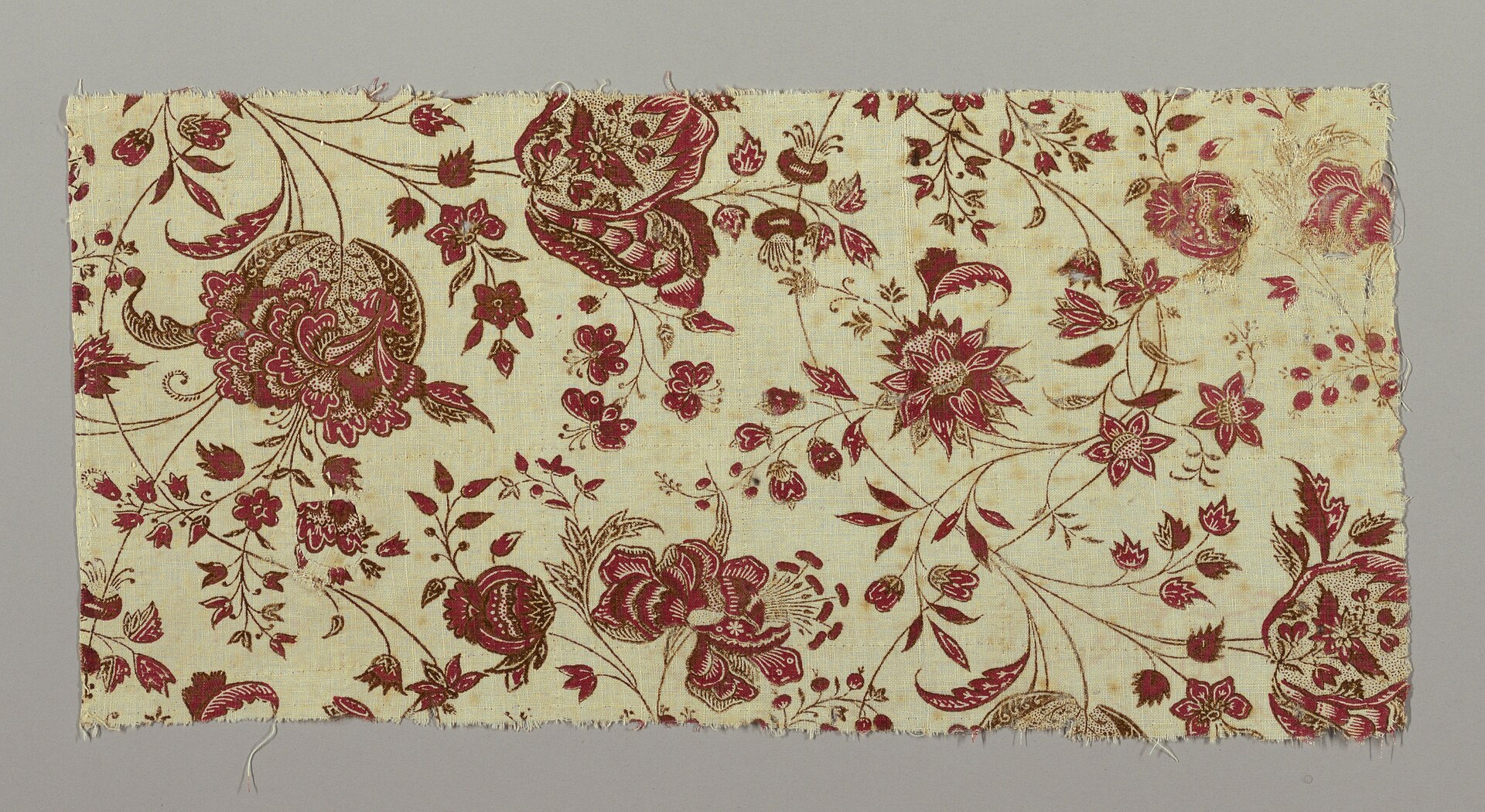
Spend a while shopping for Indian craft and you notice the same object at startlingly different prices. A hand block-printed cotton dupatta might be a few hundred rupees direct from a printing village, a thousand or two at a government emporium or a marketplace, and three or four thousand at a design label's boutique. It can look like the identical cloth. Often the cloth really is close to identical. So what are you paying for when you pay the higher price, and who gets it?
This guide takes the spread apart. The short answer is that the three prices are not one price marked up by greed; they are three different bundles of cost, risk and service, some of it real and some of it not. Knowing which is which is the difference between overpaying for a story and paying a fair premium for work you could not do yourself.
The three places the same cloth is sold
Roughly, a piece of craft reaches you by one of three routes. Direct from the maker, or from a cooperative the makers own between them. Through a trader, a government emporium or an online marketplace that buys from many makers and resells. Or through a brand or export house that commissions the work, puts its name and design on it, and sells it in a boutique or on its own site. Each route adds people, and each person has to be paid. The price climbs with the number of hands between the loom and the label.
What the maker actually keeps
Start at the bottom, because it is the number most shoppers never see. Reporting from Bagru, the Rajasthani block-printing village, the climate site CarbonCopy quoted a young natural dyer describing his economics bluntly: "For every metre of cloth we sell, we earn ₹150, and the profit margin is around ₹6." Six rupees a metre. A natural dyer the same report spoke to sold his cloth at about ₹375 a metre. That is the maker's price, and it is the floor the whole ladder is built on.
The maker often does not even sell to you; they sell to someone who sells to you. The India Water Portal, reporting on the Sanganer printing cluster, quoted the All India Artisans and Craftworkers Welfare Association putting it flatly: "In reality, the traditional printers are nothing but job workers for the trader and exporter community." A job-worker is paid for the printing, not for the finished garment's price. So the gap between ₹375 of cloth and a ₹3,000 kurta is captured almost entirely above them.
What the markup buys
Take that same CarbonCopy report's worked example. A natural dyer would sell the cloth for a kurta at about ₹375 a metre; the kurta uses less than a metre. At a high-end sustainable label, the finished indigo block-print kurta cost around ₹3,550. Between the two sit the cutting and stitching, the brand's design and sampling, wholesale and retail margins, the cost of a shop and staff, photography, returns, unsold stock and the marketing that makes you want it.
Not all of that is waste. A curator who travels to a village, places a steady order, checks quality, holds stock, runs a shop that will take a return and photographs the cloth honestly is doing real work that the maker usually cannot, and that work has a price. A good emporium or a careful brand earns part of its margin. The question is not whether a markup exists — it must — but whether the markup is buying you something, and whether any of it reaches back to the maker.
Where the markup tips into extraction
Two things turn a fair premium into simple extraction. The first is design capture. CarbonCopy found that many brands patent every design and send artisans the patterns to execute, so the maker owns nothing of the thing they made and cannot sell it themselves. The second is the story sold in place of the substance. "True supply chain transparency is followed by very few brands," the retail analyst Devangshu Dutta told the same report; large brands "can and do get away with greenwashing on a global scale... by certifying a very small fraction of their product as water-friendly or carbon-friendly." You can pay a premium that funds a marketing claim and not the maker.
The counter-example is also in the reporting. An organisation reviving block printing in Madhya Pradesh, ASHA, sells its makers' work directly, with no middleman or brand in between, and pays its artisans a monthly income starting at ₹12,000 to ₹13,000. Cut out the layers and the maker's share of the final price rises. That is the whole case for buying from cooperatives and named makers, which this site makes at length in [what the word 'cooperative' does and does not prove](essay-what-cooperative-proves.html) and in [the ethics of buying 'artisan' online](essay-ethics-of-buying-artisan-online.html).
The price to distrust is the low one
It is tempting to read this as "always buy the cheapest, it is closest to the maker." That is the wrong lesson. A real hand process has a floor below which no honest maker can sell, because the labour and the natural materials cost what they cost. A price far under that floor usually means the process was not the one claimed: a screen print passed off as block print, a powerloom length sold as handloom, a synthetic dye described as vegetable. The companion essay [why handmade costs what it does](essay-why-handmade-costs-what-it-does.html) works through those floors. The suspicious price is not the high one; it is the one that is too low for the work it claims.
What to do with the spread
Treat the three prices as a map rather than a trap. A few habits follow from it:
- Buy closer to the maker when you can. A cooperative, a named maker, or a direct village source sends more of your money to the person who did the work. The fewer the hands, the larger the maker's share.
- Pay the curator's markup when the curation is real. A shop that selects well, guarantees quality, and will take a return is worth more than a cheaper listing that does none of that. Judge the service, not just the price.
- Ask what the markup buys, and who it reaches. A brand that can name its makers and its villages is making a different claim from one selling only a mood. A [GI tag](essay-gi-tags.html) or an award tells you about the craft and the maker, not about the margin.
- Distrust the floor, not the ceiling. A price well below what the real process costs is the one to question. Reach for a guide like [hand block-printed Ajrakh](post-ajrakh-block-printing.html) to see what a genuine piece of one craft actually costs to make.
The same cloth at three prices is not proof that two of them are a swindle. It is a question worth asking at the counter: what does this price pay for, and how much of it ever reaches the hands that made the thing? A seller who can answer is usually one worth buying from.