Chikankari is white thread worked by hand on cotton, muslin and other fine cloth, and Lucknow is its centre. The Geographical Indication registration names Lucknow, the Chowk market is the main place to buy it, and the embroiderers number more than 250,000 by two published estimates, most of them women working at home. The pay for that work is low enough that the price on a tag says something about whether anyone was paid for it.
This guide covers how a piece is made, the stitches worth knowing by name, who does the work and what they are reported to earn, what to check when you hold a piece, and two itokri listings.
What chikankari is
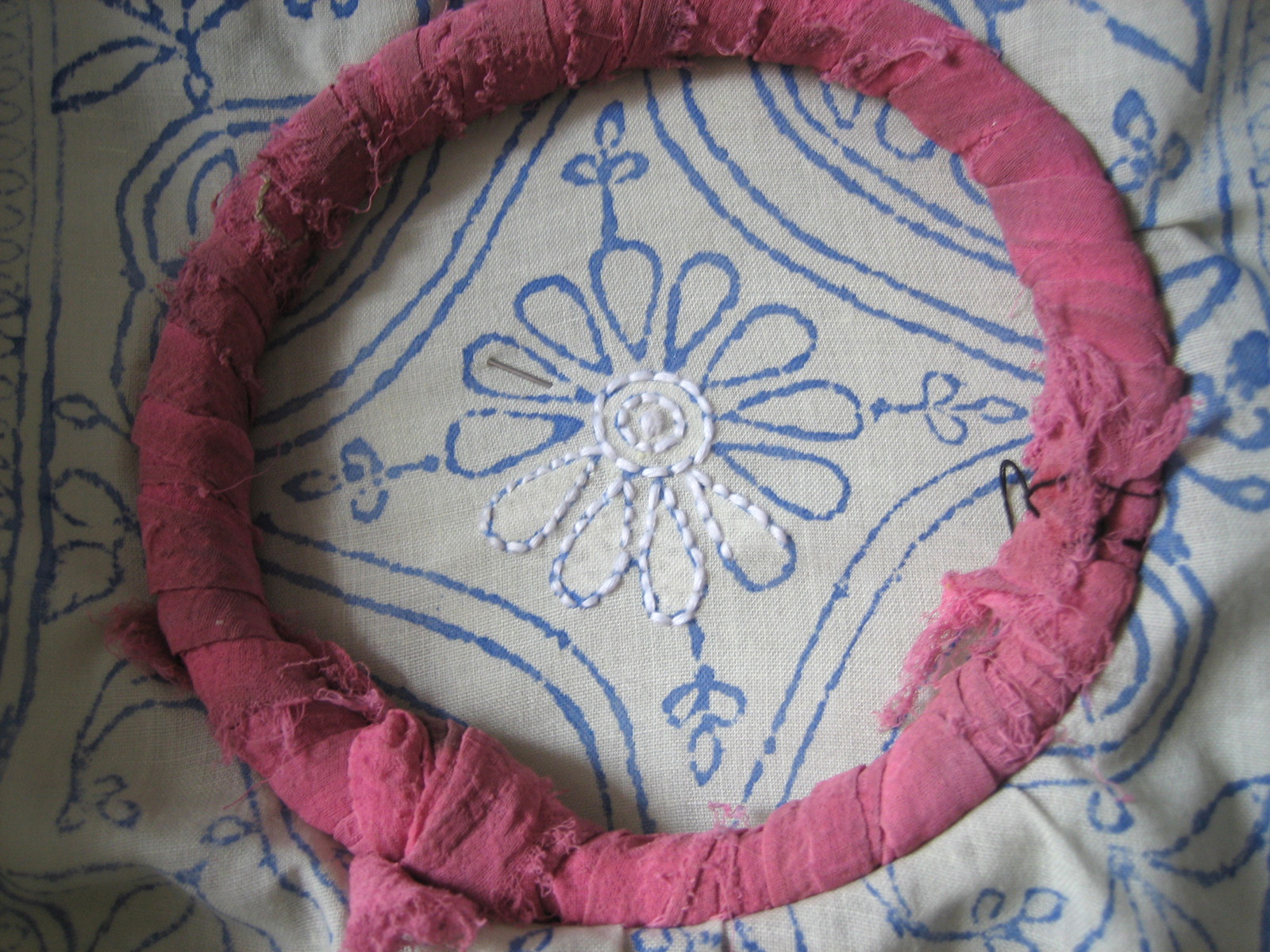
A piece goes through four stages. Designs are carved on wooden blocks, and the blocks stamp the pattern onto the cut cloth in blue ink. The cloth is set in a small round frame and an embroiderer works the pattern part by part. When the stitching is done the cloth is soaked to wash out the printed outlines and is sometimes starched. In the Gulf News account men do the block printing and the laundering, and women do most of the embroidery.
The craft began as white thread on white cloth. Today it is also worked on chanderi, georgette, viscose, silk, organza and net, in coloured thread, and with additions such as mukaish, beads and sequins. Where it began is uncertain. A popular account credits the Mughal empress Nur Jahan, Gulf News reports that some historians cite chikan work as early as the 3rd century BC and others credit the Mughals in the 17th century, and a review of Paola Manfredi's book on the craft calls its origins mysterious and places its development toward the end of the Nawabi era.
Five stitch names come up in every shop. Tepchi is a long darning stitch worked on the right side of the cloth, mostly as a base for other stitches. Bakhiya, or shadow work, is stitched on the wrong side so that it shows on the front as a shadow. Hool is a small detached eyelet, often the centre of a flower. Murri is a rice-shaped French knot used for flower centres, and Wikipedia calls it the oldest and most sought-after form of chikankari and says it is becoming rarer as fewer artisans work it. In jali, the warp and weft threads are drawn apart and held with small buttonhole stitches, and the thread is never pulled through the cloth, so the back of a jali panel is as neat as the front.
Who makes it, and what they are paid
Most embroiderers work at home, on piece rates, for agents or factories. A 2022 International Labour Organization profile of Madiyaon, a village on the edge of Lucknow, describes a home-based worker who averaged ₹4,000 a month. Before COVID-19 she worked about 25 days a month for 7 to 12 hours a day, with the most orders between August and October, and the agent or factory set her rate. Workers there reported back, hand, neck and eye pain.
Other reports give figures for single pieces. In a 2023 article by the journalist Ritwika Mitra, one embroiderer was paid ₹1,800 for an intricate piece and another ₹2,000 over eight months for one lehenga, and Farida Jalees of the Lucknow Mahila Sewa Trust, quoted in the same piece, says a garment sells for about 85 per cent more than the worker is paid. A July 2026 article in India Development Review, whose author directs SHWET, the organisation described below, says artisans in the villages around Lucknow are paid ₹20 to 50 for a kurta, because middlemen take a cut. Those figures come from different years, tasks and villages and cannot be averaged. They do show how far the wage sits below the price in a shop.
Nobody has an exact headcount. Gulf News quotes more than 250,000 "weavers", its word for the people who make the cloth, the book review gives the same figure for embroiderers and suggests the full production cycle supports over a million people, and the India Development Review article puts the industry at about 10 lakh. The general secretary of the Lucknow Mahila Sewa Trust has called for a government survey of workers' conditions.
Checking for hand embroidery
Machine-made imitations exist and are cheaper. The book review says machine-made goods are cheaper and more popular than hand work. The checks below come from brands that sell handmade chikankari, so read them as guidance from interested parties. None of them is proof alone, and a careful seller will pass all of them.
- Turn it inside out. Sellers describe hand work as showing knots, thread overlaps and shadow work on the back, and machine work as looking the same on both sides. Jali is worked so that the back stays neat, so judge a jali panel by other stitches.
- Feel the thread. Hand embroidery is described as soft and slightly raised, and machine embroidery as flat and stiff.
- Look for small irregularities. Spacing and density vary a little across a hand-worked piece. A messy back does not prove handwork by itself, as one seller's own guide points out.
- Ask three questions. Who made it, how long did it take, and is it hand-embroidered? A seller who has the answers can give them in a sentence.
- Weigh the price against the time. The Gulf News account puts embroidery alone at 10 days to a couple of months, depending on the pattern, intricacy and size of the piece. Against the pay figures above, a garment on sale for a few hundred rupees has left almost nothing for the embroiderer. That is an inference from reported figures, and no source gives a minimum fair price.
GI status
Lucknow Chikan Craft is a registered Geographical Indication in the handicraft class, application No. 119, state Uttar Pradesh. The registry record shows it filed on 7 December 2007, with certificate No. 102 and validity to 6 December 2027. The registration recognises Lucknow as the home of the craft. We found no source describing an inspection of individual pieces under the GI, so a GI mention on a listing tells you where the seller says the work comes from. It does not tell you how the piece was embroidered.
Where to buy
In Lucknow the main market is Chowk. Two organisations work directly with embroiderers. SEWA Lucknow, an association of chikan workers, began in 1984 as an "Earn While You Learn" scheme with 31 members after a 1979 UNICEF report found chikan workers were exploited by middlemen, and it now has over 7,500 members. SHWET, a skilling programme begun in 2019 by the non-profit Safe Society and launched as a brand in 2021, buys kurtas from its trained women at prices such as ₹500 and reports more than 1,000 members in its collectives. Buying from a collective shortens the chain that the reports above describe.
Online, itokri sells chikankari on its own site. Its Lucknowi listings name the craft and the city and say "hand embroidered" in the title, and none of the listings below that we read names the embroiderer or workshop, so the checks above apply to them as they would to any shop.
Specific picks
Two itokri listings, read on 9 November 2026. The kurta material and the tussar silk piece were single items with one piece in stock, and itokri's pages say designs usually do not get restocked. Both are unstitched, so budget for tailoring. Each listing says hand embroidery in its title, and none shows who did the work. Ask itokri what it can tell you before you order.
Top Pick · Mul cotton
Peach chikankari hand embroidery mul cotton unstitched kurta material
via iTokri · 2 m long, 141 cm wide, about 280 g · Lucknowi chikankari on mul cotton · Maker not named on the listing
Splurge · Tussar silk
Brown hand embroidery tussar silk chikankari unstitched kurta material
via iTokri · 2.9 m long, 104 cm wide, about 140 g · Mukaish chikankari on handloom tussar silk · Dry clean only
Looking after chikankari
- Cotton and mul. The itokri mul cotton listings advise a gentle hand wash, separately, in cold water with a mild or liquid detergent, and no long soaking.
- Silk. The tussar silk kurta material is marked dry clean only.
- Expect the outline marks to be gone. The cloth is washed after stitching to remove the printed outline, and any blue marks left on a new piece are a reason to ask the seller why.
Hero image is a representative photo via Wikimedia Commons. Product cards link to listings with prices as of 9 November 2026.