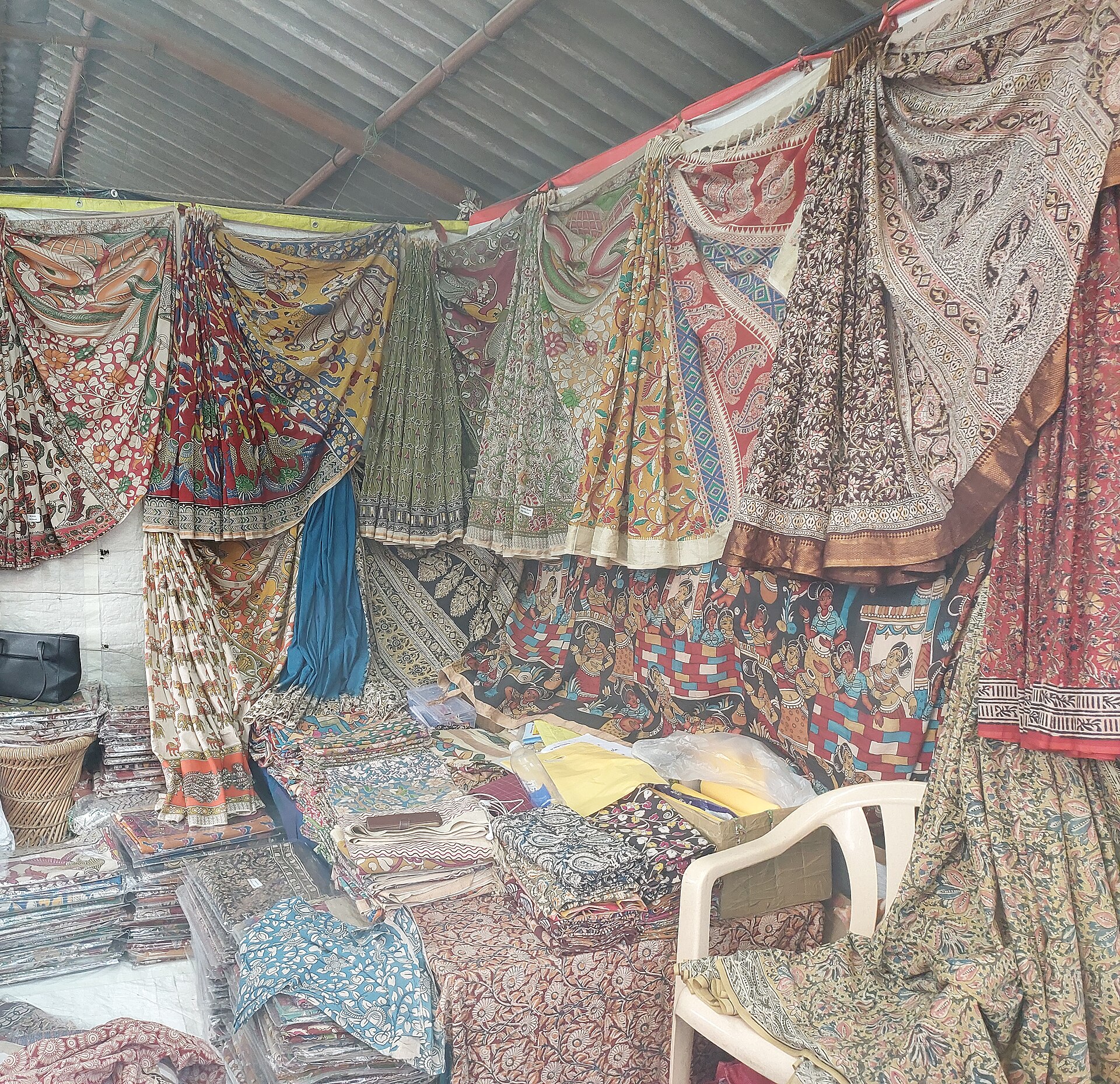
The word Kalamkari joins kalam, a pen, and kari, craftsmanship, and it means drawing on cloth with a pen. Two kinds from Andhra Pradesh are registered Geographical Indications, and they are made in very different ways. In Srikalahasti, in Tirupati district, every line is drawn and every colour filled by hand. In Pedana, 15 km from Machilipatnam in Krishna district, the design is printed with hand-carved wooden blocks. A great deal of cloth sold as Kalamkari is neither of these. It is screen-printed with a Kalamkari-style design, and it is sold beside the hand-made cloth, sometimes in the same collection on the same website.
The craft as a traded textile is usually dated to Golconda. Salma Ahmed Farooqui, a professor at the H.K. Sherwani Centre for Deccan Studies in Hyderabad, told The Hindu in 2024 that Kalamkari "came up as a textile tradition during the reign of Qutb Shahis at Golconda in 16-17th century". This guide explains how the two registered kinds are made, what each costs today, and how to work out which one a listing is selling.
What Kalamkari is
Kalamkari is cotton, and sometimes silk, coloured with plant dyes and mineral mordants. The National Institute of Design's documentation of the pen-work process, published on its D'source site, sets out the steps. The cloth is soaked overnight to remove starch, then treated with a paste of myrobalan buds and flowers mixed with buffalo milk and dried in the sun. The milk helps stop colour spreading, and the myrobalan makes the black permanent. The black, called kasim kaaram, is made from rusted iron filings with cane and palm jaggery, left to ferment in a closed pot for about ten days.
Reds come from alum painted onto the areas meant to be red, then a boil in a bath of two local roots, chavalakodi and suruduchekka. After the boil the cloth is washed at a river bank for three days until the undyed ground turns white. Yellow comes from myrobalan flowers with alum, a lighter yellow from pomegranate skin, and blue from indigo, which is filled in last. The Hindu describes the block-printed Pedana cloth going through the same kind of sequence, with myrobalan treatment, printing, river washing, a second printing and a final wash, and puts the whole process at about 16 days.
Two traditions, and why it matters
Srikalahasti Kalamkari is drawn freehand. The kalam is a bamboo reed with cotton cloth wrapped round it and tied with cotton thread, and artisans use one kind for outlines and a tapered one for filling colour. The Hindu reports that Srikalahasti artisans long made hand-painted cloth mainly for temples, to hang behind the deity or on a chariot, and only later began drawing figures from Hindu mythology on sarees and other garments. Mythological scenes are still what it is known for, though sellers also offer floral pen-work.
Machilipatnam Kalamkari is printed with blocks. The Hindu reports that Pedana's block makers carve each design into teak and keep the block in oil for a week so that it does not soak up water from the dye, and that flowers and animals became the usual motifs. Masulipatnam, as Machilipatnam was then called, was a port for this cloth. The Hindu quotes Gordon Mackenzie's Manual of the Kistna District, which says the town's 18th-century trade "had been very extensive in chintzes and colored cloths". Block printing repeats one motif many times, so the cloth is quicker to make and costs much less than pen-work.
GI status
Srikalahasthi Kalamkari, as the registry spells it, is GI application No. 28. It was filed on 16 March 2005 by Kalamkari Artisans Revival and Upsurge for National Acclaim (KARUNA) of Srikalahasti, and its certificate is dated 12 January 2006. Machilipatnam Kalamkari is application No. 90, filed on 16 April 2007 by the Vegetable Hand-block Kalamkari Printers Association of Pedana, with a certificate dated 10 July 2008. Only registered proprietors and authorised users may use a registered GI name for their goods. The registry lists three authorised users for Srikalahasthi Kalamkari and 18 for Machilipatnam Kalamkari, so asking a seller whether a piece comes from a registered user is a fair question.
Telling hand-painted cloth from a print
A listing that says only "Kalamkari print" or "Kalamkari design" is usually describing the look of the cloth and saying nothing about how it was made. These checks help place a piece:
- Read the craft field. Good sellers state the technique. On 6 October 2026 iTokri's Kalamkari saree collection held more than a hundred sarees described as Kalamkari prints beside its pen-work and block-printed ones. The two we opened both say "Kalamkari Screen Printing" under Craft. When a listing names no technique, treat the piece as a print until the seller says otherwise.
- Look for variation. Sellers of hand-painted and block-printed pieces warn buyers to expect slight differences in colour, small smudges and uneven patterns. A screen print reproduces the same image at every repeat.
- Check the reverse. In the natural-dye process the whole cloth is boiled in the dye bath, so the colour is in the fibre and the design shows on the back, fainter than on the front. A design that is bright on the front and barely there on the back is more likely a surface print.
- Notice the smell. iTokri's listing for a pen-work dupatta warns that it "carries a distinct natural odor".
- Ask about the dyes, even for block prints. The Hindu reported in 2024 that the Pedana maker Pitchuka Srinivas was one of the few still promoting traditional dyeing, "as most others have begun using chemicals". Hand block printing and natural dye are two separate claims, and a listing should make both.
- Compare prices with care. On iTokri on 6 October 2026, sarees listed as Kalamkari prints cost ₹1,690 to ₹3,150, hand block-printed cotton sarees from Pedana ₹2,600 to ₹4,690, and hand-painted pen-work sarees, all of them silk, ₹13,900 to ₹45,990. Pen-work dupattas started at ₹3,800. The cheapest block prints overlap with the dearest prints, so price alone cannot settle it.
Where to buy
iTokri is the easiest place to compare the three kinds, because its listings state the craft, often name the maker, and give the number of days the work took. Read the craft line on each listing, since its main Kalamkari saree collection mixes screen prints with hand work. Shobitam, BharatSthali and Panjavarnam also sell hand-painted pen Kalamkari online.
Lepakshi is the shop name of the Andhra Pradesh Handicrafts Development Corporation, a state government undertaking that markets crafts from the state, Kalamkari among them, through its website. Amazon India and other marketplaces carry a great deal of Kalamkari-style cloth. Buy there only when the listing names the technique and the dyes.
Specific picks
Three pieces from iTokri, one of each kind of hand work, each checked on 6 October 2026 for price, stock and what the listing claims.
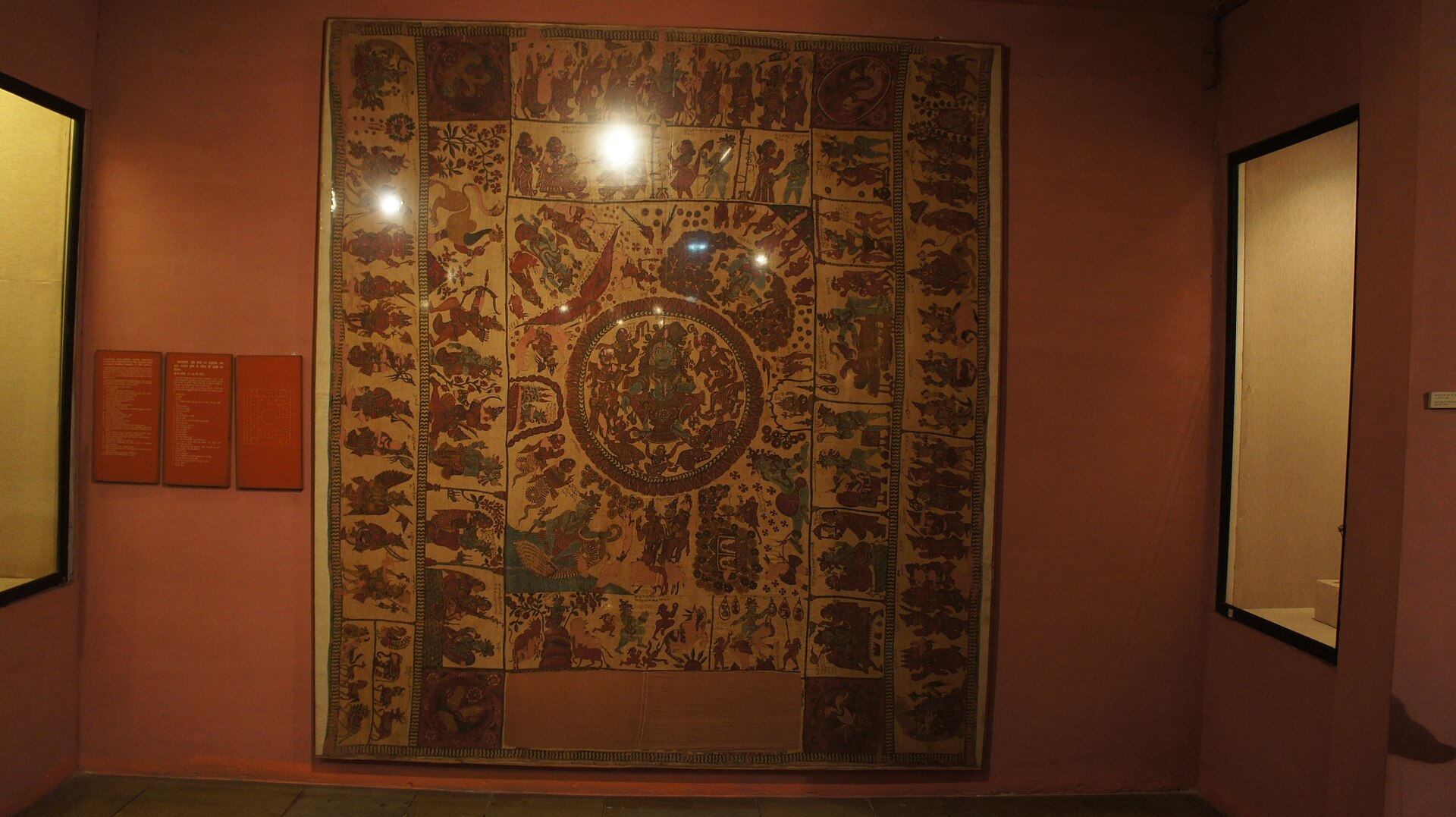
Top pick · Hand-painted
Srikalahasti pen-work Kalamkari dupatta, blue, Mangalagiri cotton
via iTokri · Listing states drawn freehand with natural dyes on Mangalagiri handloom cotton, about 30 to 35 days' work · Zari border and tassels · 226 × 113 cm
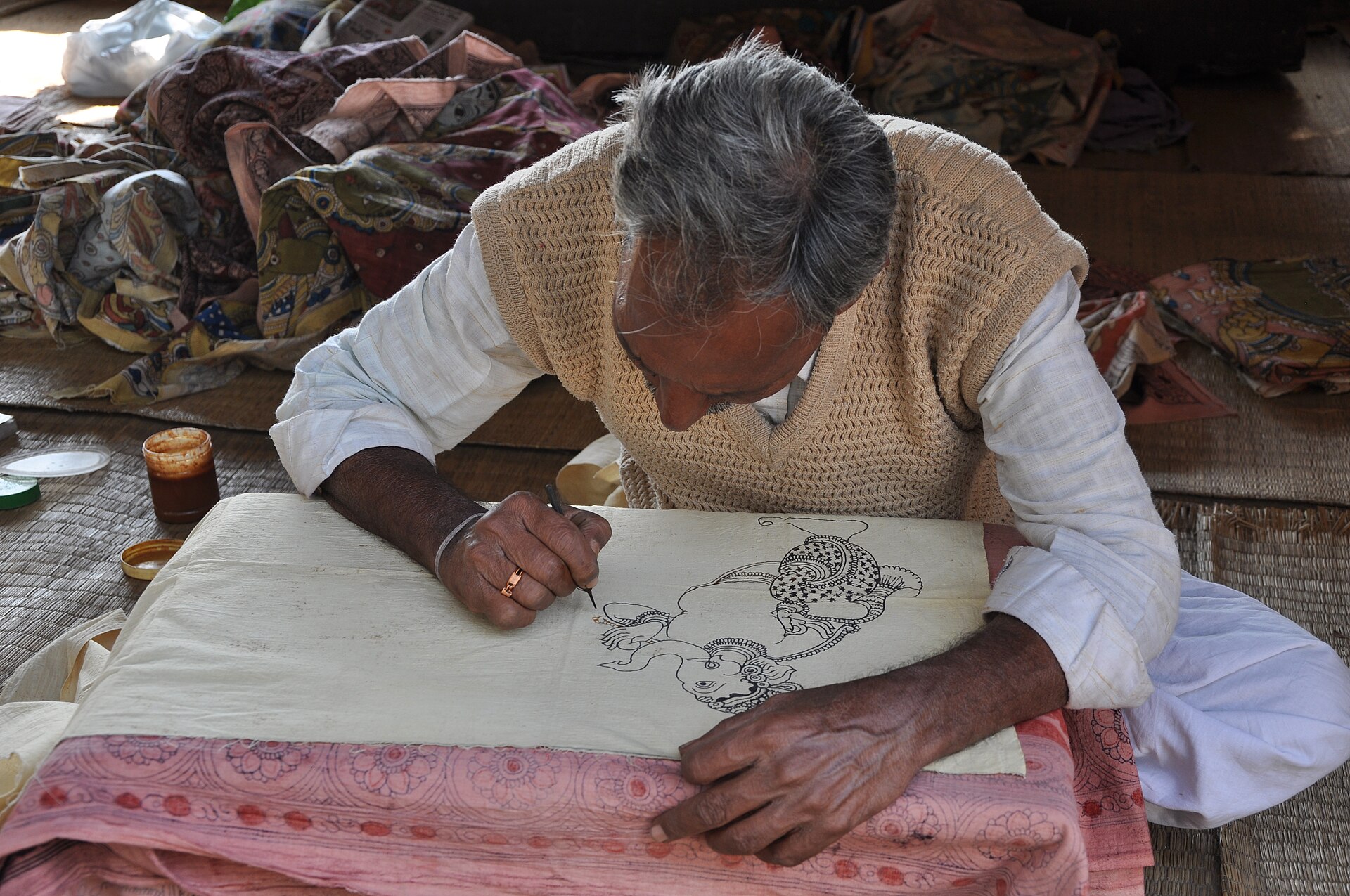
Saree · Hand block-printed
Pedana hand block-print natural-dyed cotton saree, red
via iTokri · Machilipatnam style from Pedana, Krishna district · Listing states hand-carved wooden blocks and natural dyes, 15 to 20 days' work · 6.45 m including blouse piece
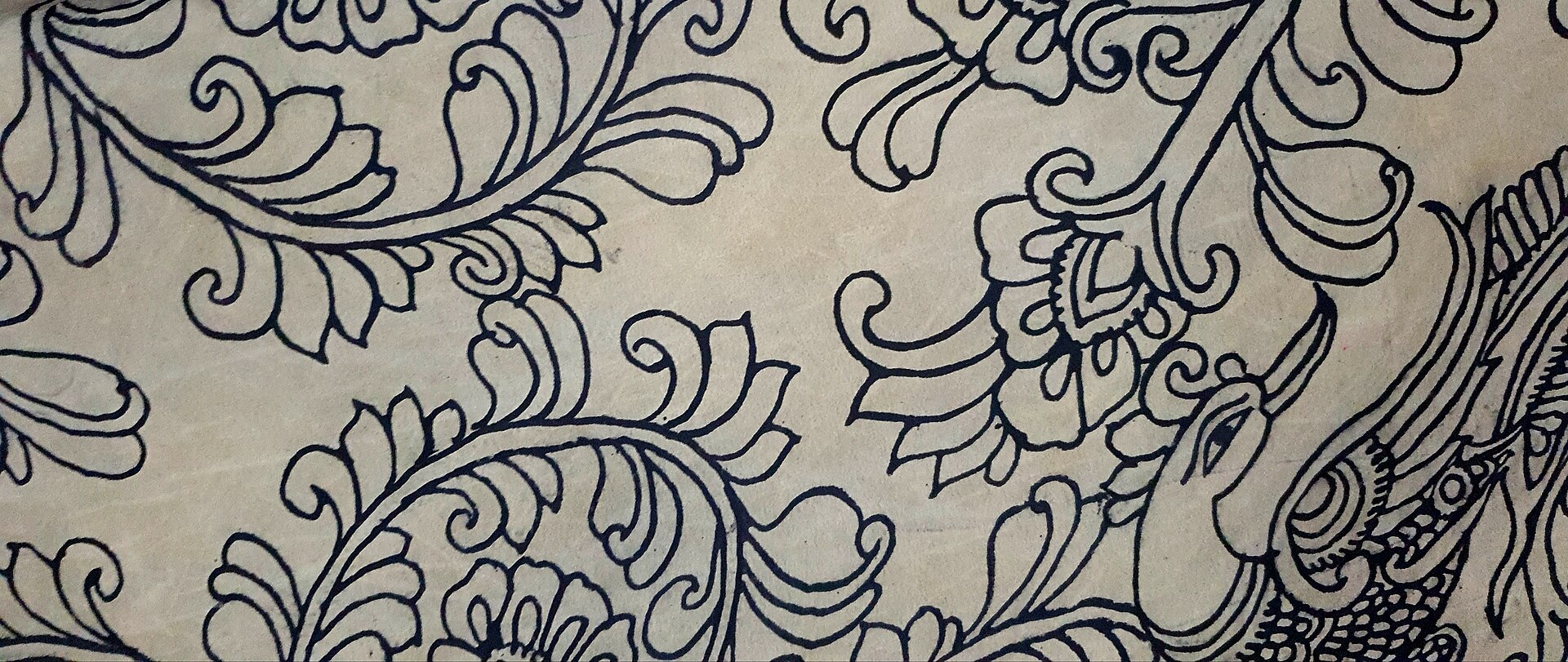
For makers · Fabric
Pedana hand block-print natural-dyed cotton fabric, yellow
via iTokri · Listing names the maker, Pitchuka Srinivas of Pedana · Natural dyes · 119 cm wide · Sold in half-metre units, not pre-washed
Caring for Kalamkari
All three listings above give the same instructions. Hand-wash separately in cold water with a mild or liquid detergent, and do not leave the cloth soaking for long. Natural dyes can release excess colour in the first one or two washes, and iTokri recommends soaking a new saree or length of fabric in salt water before it is worn or stitched. The fabric listing adds that the cloth is not pre-washed, so soak it before it goes to the tailor.
Dry Kalamkari in the shade. iTokri's care notes for cotton advise air-drying in shade "for best color retention".
Product-card images are representative museum and market pieces and do not show the exact item listed. Photos via Wikimedia Commons: Adbh266 / Wikimedia Commons (CC BY-SA 4.0), Ravitheja Kumar Reddy C / Wikimedia Commons (CC BY-SA 4.0), Spacetime29 / Wikimedia Commons (CC BY-SA 3.0). Product cards link to current listings, checked on 6 October 2026.