Eri is the silk of Assam and the wider North East. It is spun from the cocoons of Samia ricini, a silkworm that feeds on castor leaves, and its name comes from era, the Assamese word for castor. Most buyers meet it as a shawl or stole sold as peace silk, ahimsa silk or vegan silk. This guide covers what eri is, what the sources say about that label, what the GI registry protects, and three listings, with prices as of 26 October 2026.
What eri is
Eri is also written endi or errandi. India produces four silks commercially (mulberry, tasar, eri and muga), and the Ministry of Textiles' annual report for 2025-26 puts eri output in 2024-25 at 7,886 tonnes of raw silk, 19.17 per cent of the national total of 41,121 tonnes. The Central Silk Board's training course ware on eri culture says North East India is considered the centre of origin of the eri silkworm and that around 1.32 lakh families of Assam were involved in eri culture. The document is undated.
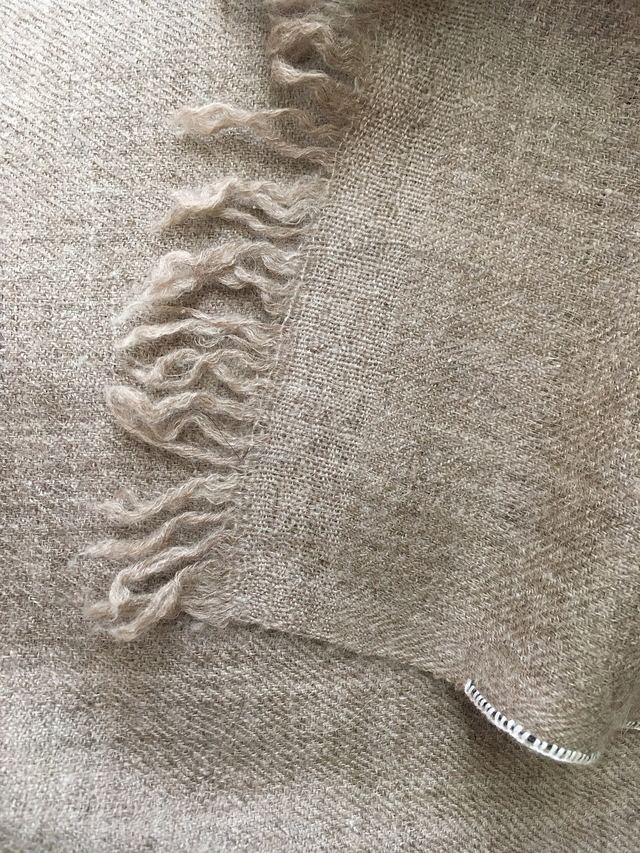
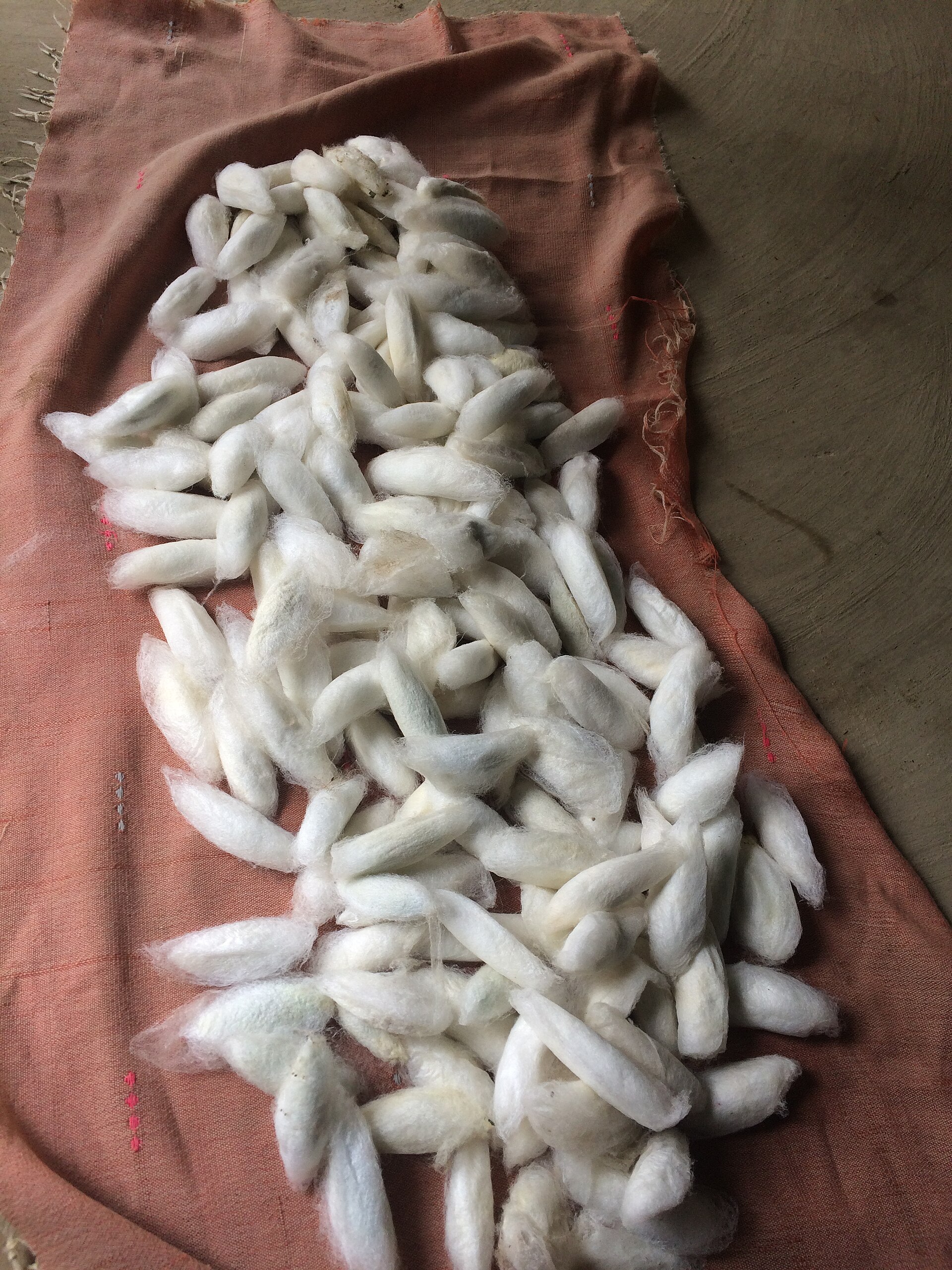
The cocoon is open at one end and its filaments are short and broken, so the shell cannot be reeled off as one long thread, as a mulberry cocoon can. A 2024 paper from Assam Agricultural University's Krishi Vigyan Kendra in Kokrajhar describes the treatment before spinning. The cocoons are boiled for 45 minutes in an alkaline solution, with traditional versions made from the ash of paddy straw, black gram, mustard or banana plants, then washed, dried and spun. The yarn is a staple fibre, spun the way cotton or wool is, and Wikipedia notes that it is often more cottony than silk from the mulberry silkworm. Undyed eri runs from white to faint gold, with some rust-red variation. The cloth is warm and matte, and it is used for shawls, stoles, quilts and the mekhela chador.
What the peace silk label rests on
The name rests on one fact about the cocoon. Because it is open, a moth can leave it, and the empty shell can be spun without boiling a live pupa inside. The Kokrajhar paper says the woolly silk is popularly known as the 'fabric of peace' because the process does not kill the moth.
The Central Silk Board's course ware describes the handling of commercial cocoons in more detail. Cocoons are to be harvested 5 to 6 days after spinning in summer and 8 to 9 days in winter, and the moths of the seed cocoons kept for the next generation emerge about 18 to 19 days after spinning. A cocoon collected for silk is therefore collected well before a moth could leave it. The same document lists removal of the pupa as a labour item, and it says that in eri culture the cocoons are meant for silk production and the pupae for seed and for the diet of the people of North East India. Its costed example of four castor-fed crops a year has 32 kg of cocoons sold at ₹300 a kg and 248 kg of pupae sold at ₹200 a kg, which is ₹9,600 against ₹49,600, a return of ₹59,200. The same table puts the total investment at ₹38,484 and the net profit at ₹20,716. Those prices belong to the example and are undated.
The Kokrajhar paper says the tribal population of Assam and the North East rears eri mainly for food, that the pupa is a delicacy, and that the cocoon is a secondary by-product. Verve magazine reports that weavers get their cocoons back after the pupae have been removed, and that eating the pupae is common among the Sonowal Kachari and other communities of Upper Assam. A rearer who sells the pupae is earning from both products of one cocoon, and the pupae are an established part of the diet in these communities. For a buyer, the consequence is that peace silk cannot be assumed from the fibre.
None of the sources we read says what share of eri cloth comes from cocoons the moth has left. Some makers do work that way. The seller Kal says the moth emerges before the silk is harvested, and offers no outside verification. No certificate covers the claim. The Oeko-Tex certification that the North Eastern Handicrafts and Handlooms Development Corporation announced for eri in August 2024 is described in the press report as a test for harmful substances. The Silk Mark label, covered below, is for 100 per cent pure silk. We found no registry or standard that defines peace silk for eri.
If the claim matters to you, ask the seller whether the cocoons were left for the moth to leave before spinning, and who reared them. An answer that names a village, a cooperative or a family can be checked. The word 'ethical' on a tag gives nobody anything to check.
Checking a piece before you pay
- Look at the yarn. Hand-spun eri varies in thickness and the cloth looks woolly. Even, glossy, slippery cloth sold as eri needs an explanation.
- Read the material line for a blend. Spinning makes eri easy to mix with cotton or wool, and iTokri's own stole listing says it 'blends well with wools and cotton'. The listing for the Mising shawl below is titled eri silk and describes the material as an eri silk-cotton blend, without giving the proportions.
- Look for the Silk Mark. The Silk Mark Organisation of India says its label goes only on 100 per cent pure silk, and that the hologram, unique serial number and QR code make copies difficult. Its FAQ lists eri among India's silks, but we could not confirm from that page that eri products carry the label, so ask. For an online order, keep the original bill.
- Burn a thread from a hem. The Silk Mark's flame test says silk burns slowly, leaves a black bead that crumbles between the fingers and smells of burnt hair. Cotton burns continuously with a paper smell, and polyester melts into a hard bead. Take the thread from a seam allowance you can spare, hold it with tweezers over a dish or sink, and keep the flame away from anything that burns.
- Check the colour claim. Undyed eri is white to faint gold. A deep colour should come with a dye claim, and a natural dye is a statement the seller should be able to back.
GI status
The registry record is titled Eri Silk / Indi Silk (application No. 960), for handicrafts in classes 23 and 24, with the geographical area given as Assam. The applicant is the Bodo Geographical Indication Board of Kokrajhar. It was filed on 29 August 2022 and advertised in Journal 185 on 29 November 2023. The certificate, No. 606, is dated 30 March 2024 and the registry shows it valid to 28 August 2032. Six authorised users are listed. IP India's list of registered GIs as of 31 December 2025 and EastMojo call it Bodo Eri Silk, while EastMojo writes Boro Eri Silk and credits the application to the Association of Bodo Traditional Weavers, so the sources differ on who applied. We did not read the statement of case, so we cannot say whether the protected area is the Bodo Territorial Region or Assam as a whole. Muga has a separate GI, Muga Silk of Assam, which was filed in 2006. A listing that says GI-tagged eri should name the registered GI and the maker.
Where to buy and what it costs
Buy from a maker, a cooperative or a seller that names the weavers. iTokri's Mising shawl listing says the piece is made by the Mising people of Assam, and its aari shawl listing names the partner whose artisans spun and wove it. For an eri piece with a GI claim, ask for the maker and the place of origin in writing.
On 26 October 2026 the eri pieces on iTokri ran from ₹3,190 for a 75 g stole to ₹11,990 for an aari-embroidered shawl. Compare weight and size as well as price, because the stole weighs 75 g at 198 by 70 cm and the shawl-cum-stole weighs 95 g at 180 by 84 cm.
Specific picks
Three listings, each read on 26 October 2026 for price, stock and what the page says. None of the three makes a peace silk claim. Ask each seller about the cocoons and the material before you buy.
Top pick · Handspun natural dye
Grey handspun handloom natural dyed eri silk stole
via iTokri · Listing says handspun, handloom and natural dyed · 198 by 70 cm, about 75 g · Dry clean only · No peace silk claim made
Mising weave · Blend
Beige Assamese gero design Mising eri silk handloom shawl cum stole
via iTokri · Listing says made by the Mising people of Assam · Eri silk-cotton blend, 180 by 84 cm, about 95 g · Dry clean only
Embroidered · Single piece
Handspun handwoven pure eri silk aari hand embroidered shawl of Assam
via iTokri · Listing says 100% pure natural silk fibre, handspun and handwoven by Weave India artisans of Assam · One piece per design, no size or care text on the page
Looking after eri
- Follow the instruction on your piece. iTokri's stole and shawl-cum-stole listings both say dry clean only, while another seller, Pernia's Pop Up Shop, says eri softens with washing. Ask the seller for the care instruction for the piece you are buying.
- Keep the bill and the label. The Silk Mark FAQ advises keeping the original bill for online purchases.
- Do not test a visible area. Run the flame test on a hem thread, since burning damages cloth.
Hero image is a representative photo via Wikimedia Commons. Product cards link to listings with prices as of 26 October 2026.