Kansa is the Indian name for bell metal, a bronze made of copper and tin, and it is sold as plates, bowls, glasses and cooking pots. Much of what is sold under the name online comes with health claims that no study we could find supports, and some of it is brass. This guide covers what the alloy is, where it is made, what is known about copper and lead getting into food, and how to check a piece before you pay for it.
What kansa is
Bell metal is a bronze with more tin than most, usually about four parts copper to one of tin, which works out at roughly 78 per cent copper and 22 per cent tin. A 2024 review of the classical Ayurvedic texts gives the same recipe, four parts copper melted with one part tin. Makers vary it. Workshops at Khagra in West Bengal mix copper and tin in a ratio of 7 to 2, and a Sarthebari seller gives 80 per cent copper and 20 per cent tin for its glasses. Brass is a different alloy, of copper and zinc. The extra tin is what makes bell metal stiff and resonant, which is why the same alloy is cast into temple bells.
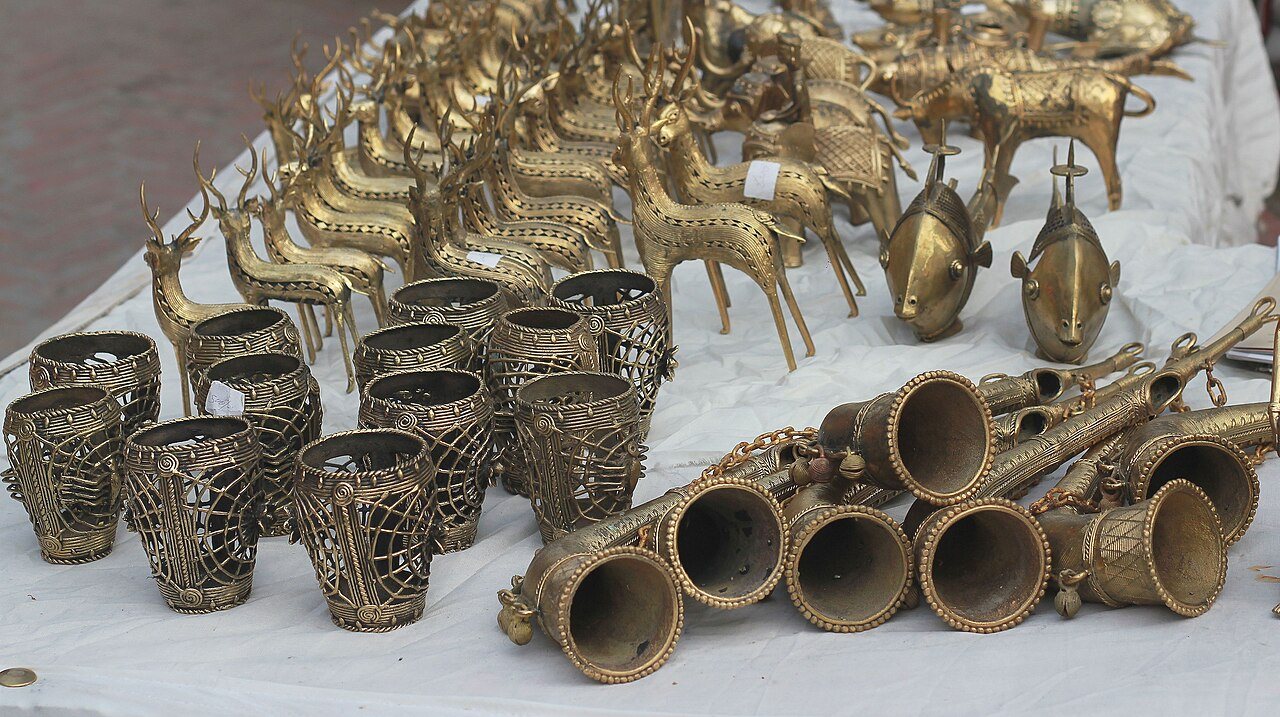
Several regions make it. In Odisha the best-known centres are Balakati in Puri district, near Bhubaneswar, and Kantilo in Nayagarh district, on the Mahanadi, with a long history of working brass and bell metal. In Assam the centre is Sarthebari in Barpeta district, whose craft now carries a GI. At Khagra, in Murshidabad district of West Bengal, workshops cast bell-metal plates, bowls, glasses and pitchers. In Kerala, Mannar in Alappuzha district and Kunhimangalam in Kannur make the uruli, the wide, shallow cooking vessel, and the nilavilakku lamp in bell metal.
There are two ways of shaping it. Balakati workshops mostly hammer it. Copper and tin are melted together and poured into small ingots, and three or four people beat each heated ingot into shape on a stone platform while another turns it, reheating the metal as they go. Other pieces are cast. Khagra's makers pour the metal into clay moulds, then file, hammer and polish each piece on a lathe, and Mannar Craft's urulis are hand-cast.
What Ayurveda says, and what has been tested
Ayurvedic texts give kansa a place of its own. The 2024 review in the Journal of Ayurveda and Integrated Medical Sciences classes it among the mixed metals of Rasa Shastra and notes that "in ancient Kala, Kansya utensils were used for cooking practices". It also records the texts' own test of good kansa, which should give a sharp sound and be "slightly grayish", while yellow metal with a low sound is rejected. The health benefits that tradition attaches to eating from kansa remain tradition. We found no clinical study showing that eating or drinking from kansa has any effect on health, and the review's authors say that very little research has been done on kansa at all.
Sellers go further than the texts. Listings we read for this guide describe kansa as alkalising, pH-balancing and antibacterial, and one says it eliminates toxins from water. We found no peer-reviewed study of kansa vessels that supports any of these claims. The nearest is a 2012 study in which drinking water contaminated with diarrhoea-causing bacteria and kept in copper pots for 16 hours had no recoverable bacteria afterwards. Those pots were copper, tested in a laboratory, and the result says nothing direct about a bronze glass.
Copper, acid and lead
Kansa is mostly copper, and copper dissolves into acidic food. The US Food and Drug Administration's Food Code says copper and copper alloys may not be used in contact with food that has a pH below 6, such as vinegar, fruit juice or wine, because "when copper and copper alloy surfaces contact acidic foods, copper may be leached into the food", and high concentrations have caused foodborne illness. Swallowing a high amount of copper can cause vomiting, nausea, abdominal pain or diarrhoea, according to the US Agency for Toxic Substances and Disease Registry. The Food Code is written for restaurants and shops, and it makes no exception for bronze. We found no study measuring how much copper a kansa plate gives up to a sour dish over a meal. The cautious course is to keep tamarind, tomato, lemon and other sour food in kansa for as short a time as possible and never to store it there.
The second risk is lead. Lead is sometimes added to bronze and brass vessels "to improve malleability or reduce production costs", New York City health officials reported in 2025. They had traced raised blood lead in a pregnant woman, her spouse and their child to kansa and brass utensils bought in Nepal. One cup leached lead at 309 milligrams per litre, where the FDA's guidance limit for comparable products is 7. In a 2025 study of cookware sold in the United States, every one of the four brass items made in India either contained very high levels of lead or leached it above recommended limits, one by more than 1,200 times the limit for children. The FDA has warned against a list of imported brass and aluminium cookware for the same reason. This does not mean every piece of kansa contains lead. You cannot tell by looking, and a seller's "lead-free" is worth only as much as the test report behind it.
Tinning, and why kansa is sold bare
Kalai is the tin lining that a kalaiwala applies to the inside of copper and brass vessels. The vessel is cleaned and heated over coal until it is pinkish hot, strips of tin and nausadar (ammonium chloride) are put on it, and the melted tin is rubbed over the surface with cotton until a silvery coat forms. The lining keeps food off the copper, and it wears away with use, so it has to be redone. An old brass handi that is silver inside has been tinned.
Kansa is sold and used bare, and none of the kansa listings we checked mentions a tin lining. A piece sold as kansa that arrives silver inside is a reason to ask whether it is brass. Bare kansa is still a copper alloy, and the copper and lead cautions above apply to it as much as to untinned brass. If you own brass or copper cookware, keep a kalaiwala's number and have it re-tinned when golden metal starts to show through the silver.
Telling bell metal from brass
The commonest problem online is brass sold as kansa, and the two look alike in a product photograph. These checks help. None of them is proof, and none tells you whether the metal contains lead.
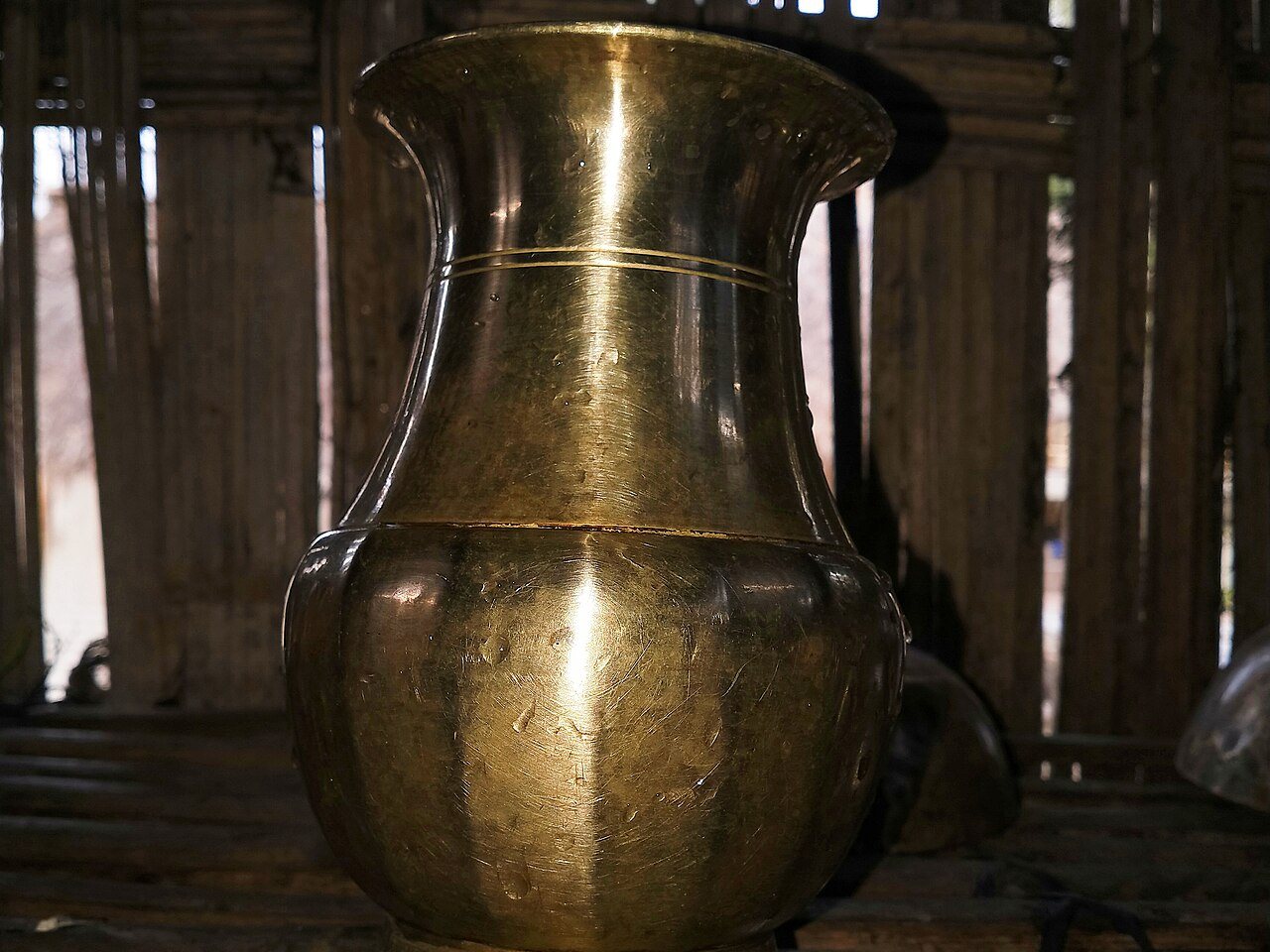
- Look at the colour. Bell metal is a paler, greyer gold. The texts' own test asks for metal that is slightly greyish and rejects metal that is yellow. Brass is yellow.
- Tap the rim. The same texts ask for a sharp sound and reject a low one, and the high tin content is what makes bell metal ring. A dull note is a reason to ask questions.
- Check the weight. Careful sellers state it. KahPital sells the same 11-inch thali at 750 grams and at 1.1 kilograms, at different prices, so compare weight as well as diameter.
- Check the price. From the makers we checked, a 200-gram kansa glass costs ₹1,039 and a 750-gram thali ₹4,809. A thali offered as pure kansa for a small fraction of that needs an explanation.
- Ask about composition and origin. Ask for the copper-to-tin ratio, whether the piece was hammered or cast, and where it was made. A seller who cannot say is a reason to buy elsewhere.
- Ask about lead. None of the checks above finds it. Ask whether the metal has been tested, and ask to see the report.
GI status
Sarthebari Metal Craft, from Barpeta district in Assam, is a registered GI for bell metal, application No. 1013, filed on 9 November 2022 by the Assam Co-operative Bell-Metal Utensils Manufacturing Society. The certificate is dated 30 March 2024 and runs to 8 November 2032, and the registry lists 280 authorised users. Kantilo Brass and Bell Metal Craft, from Odisha, is application No. 1180, filed on 13 February 2024 by Utkalika, the Odisha State Co-operative Handicraft Corporation. It is still under examination, with an examination report dated 4 June 2026. The Nachiarkoil Kuthuvilakku GI from Tamil Nadu covers brass lamps and does not cover tableware. A GI label on a listing is worth checking against the registry.
Where to buy and what it costs
Buy from a maker, or from a seller who names one. KahPital sells Sarthebari bell metal online and names its manufacturer, Nikunja Bell Metal Industry, with GST numbers for both businesses. Mannar Craft sells urulis cast in Mannar. In Odisha, bell-metal ware is sold through emporia in Puri, Cuttack and Bhubaneswar. On marketplaces, apply every check above to every listing, and treat an unbranded listing with no weight, no composition and no maker as a gamble.
Prices on 6 October 2026 from the listings below were ₹1,039 for a 200-gram kansa glass, ₹4,809 for an 11-inch kansa thali weighing 750 grams and ₹7,409 for the 1.1-kilogram version, and ₹3,800 for an 8-inch, 1.5-litre bronze uruli from Mannar, rising to ₹8,000 for the 12-inch size and ₹31,500 for 21 inches.
Specific picks
Three pieces, each checked on 6 October 2026 for price, stock and what the listing says. All three listings repeat health claims this guide could not confirm, and none shows a lead test result, so ask for one before you buy. Tap the rim and check the weight when the piece arrives.
Top pick · Sarthebari bell metal
KahPital bell-metal thali, 11 inch
via KahPital · Made by Nikunja Bell Metal Industry, Sarthebari, Assam · 750 g or 1.1 kg (₹7,409) · Copper-to-tin ratio not stated on the listing
Daily use · Glass
KahPital kansa glass
via KahPital · 200 g, 3.5 inches tall · Listing states 80% copper and 20% tin · Use it for water and milk, and keep sour juice out of it
For cooking · Uruli
Mannar Craft bronze cooking uruli, 8 inch
via Mannar Craft · Hand-cast in Mannar, Kerala · 1.5 litres, 1.75 kg · Listing says lead-free and shows no test report · Larger sizes up to 21 inches
Looking after kansa
- Wash it with a soft sponge and mild soap. KahPital, which sells Sarthebari kansa, advises against harsh scrubbers because they scratch the surface.
- Dry it and store it dry. Kansa tarnishes, and damp storage makes it tarnish faster.
- Polish it when it dulls. Tarnish is normal, and sellers recommend regular polishing to keep the shine.
- Keep sour food out of it for long periods. Serve it and move it, for the copper and lead reasons above.
- Watch the inside of any brass or copper pots you own. When the silver lining wears through to golden metal, stop cooking sour food in it and have it re-tinned.
Product cards link to current listings, checked on 6 October 2026.