Madhubani painting is also called Mithila painting, after the region it comes from. Mithila covers part of northern Bihar and reaches into the lowlands of southern Nepal, and its women painted gods and goddesses on the mud-plastered walls of their homes for weddings, births and festivals. Literary references show the practice at least as early as the 14th century, according to the Sainsbury Centre. Painters made their own colours and worked with their fingers, twigs, nib pens, matchsticks and brushes of bamboo and cotton.
Few outsiders saw the paintings until 1934, when an earthquake near Madhubani brought down walls and the British official William G. Archer photographed the murals inside. In 1966 and 1967, during a drought in Mithila, Pupul Jayakar, then director of the All India Handicrafts Board, proposed that the women paint on paper for sale. She sent Bhaskar Kulkarni, an artist from Bombay, to encourage them. Mithila painting as a commercial art starts there, and it has since reached museum galleries in Japan and the United States; the Asian Art Museum in San Francisco showed 17 contemporary Mithila artists in 2018. The motifs now also appear on sarees, mugs, laptop sleeves and home decor, as Down To Earth reported in 2025, and online they sit beside framed reproductions sold under the same name. This guide is about buying a hand-painted original and paying the artist who made it.
What Madhubani is
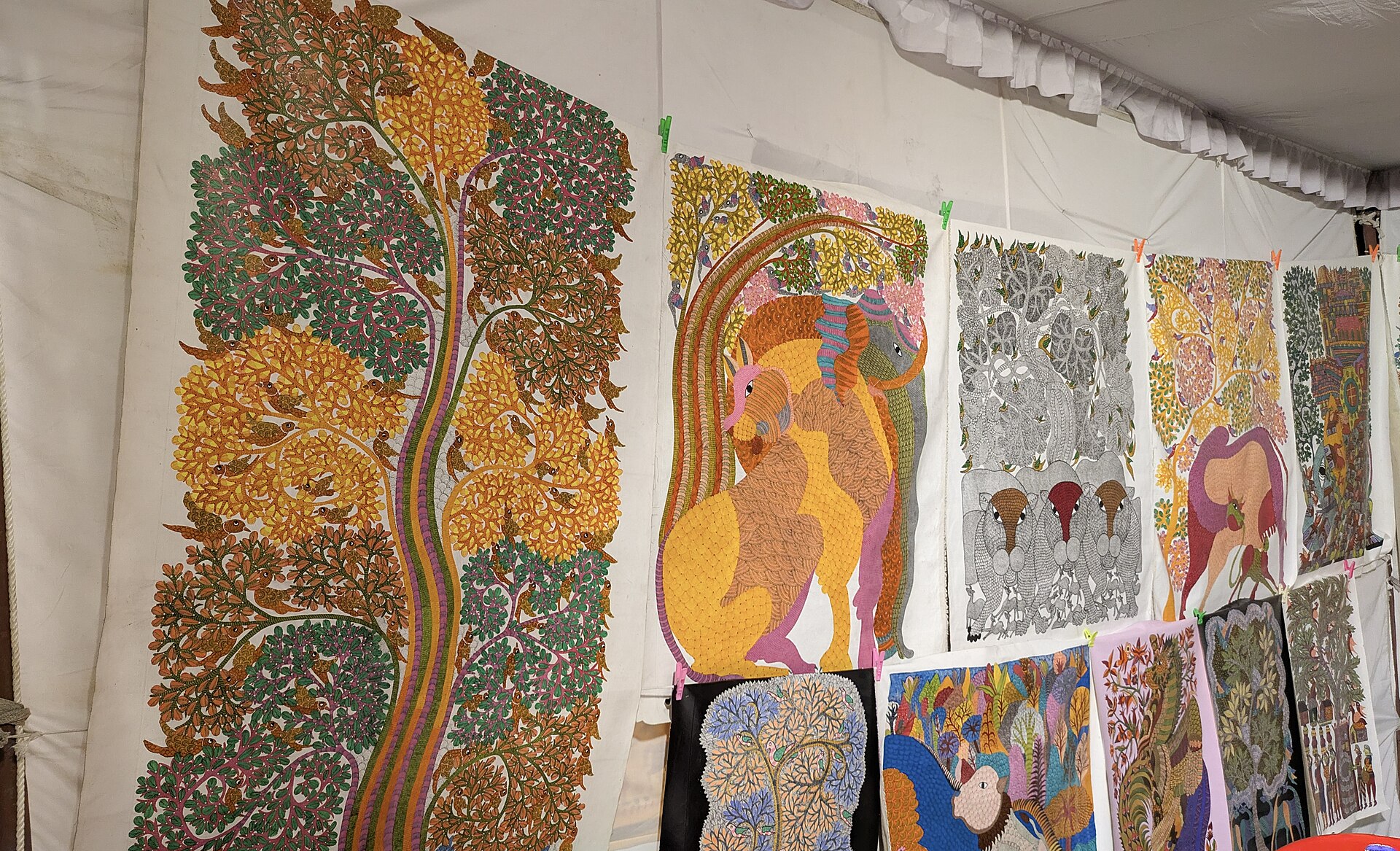
A Mithila painting leaves no empty space. Gaps between the main figures are filled with flowers, animals, birds and geometric designs. The subjects come from nature and the epics: Hindu deities, the sun and the moon, the tulsi plant, and scenes from royal courts and weddings, as the Wikipedia summary of the literature puts it. The kohbar, the wedding motif, is built around a lotus and a bamboo grove with fish and birds around them, and is painted on the wall of the marriage room as a charm for a fruitful union, as the collector Peter Zirnis describes it.
The colours were traditionally made by the painters. The Bihar government's own description lists black from soot mixed with cow dung, yellow from turmeric or pollen, blue from indigo, red from kusum flower juice or red sandalwood, green from the leaves of the wood apple tree, white from rice powder and orange from palash flowers. Many artists now paint in acrylic or fabric colour. The Amrita Das kohbar in Zirnis's collection is acrylic on paper, and iTokri's hand-painted dupattas use fabric colours. The drawing and the filling are still done by hand in both.
Five styles, and why the name on the label matters
Madhubani covers five recognised styles, Bharni, Kachni, Tantrik, Godna and Kohbar, and they were once tied to caste. The first paintings on paper came from Brahmin and Kayastha women, and Dusadh and Chamar artists were left out of the early government programme, according to the Sainsbury Centre. Artists of every caste now work across the styles, and a 2025 column in Down To Earth notes that the old distinctions between Bharni, Kachni and Godna are less rigid than they were. Knowing the names helps you read a listing and judge whether a seller knows the work:
- Bharni means filling. Outlines are filled with solid colour, often in paintings of Rama and Sita and other deities.
- Kachni means line. The image is built from line work.
- Godna is tattoo painting, practised by Dalit Dusadh women, with Jitwarpur village as its centre. It is mostly black and white, often on handmade paper washed with cow dung and glue, and its subjects are nature, daily life and Dusadh deities such as Salhesh. Artists date its move onto paper to the 1970s and to two women, Zahida and Chano Devi, according to Behanbox.
- Tantrik paintings show deities such as Durga and the ten avatars of Vishnu.
- Kohbar is the painting on the wall of the marriage room, where the bride and groom spend their first night. It is the style closest to the original purpose of wall painting.
GI status
Madhubani Paintings were registered as a Geographical Indication in 2007, according to the Government of Bihar. The applicant was the Director of Industries, Government of Bihar, and in November 2025 the GI registry listed only 51 authorised users, while hundreds of households in Jitwarpur alone have someone who paints, according to Down To Earth. Most working Madhubani artists are outside the register, so a listing without a GI number tells you little. Ask the seller for the artist's name and village.
Original or print
The usual mistake is paying an original's price for a reproduction. On 6 October 2026 an Amazon India search for Madhubani painting returned framed pieces from ₹199 to ₹2,495. Several titles called themselves posters or digital paintings, and many others said only "painting". In a thumbnail a print and a painting look alike. In the hand they differ in these ways:
- Look at the surface at an angle. Colour put on by hand shows the strokes of the brush or pen, and a printed sheet is flat. Under a jeweller's loupe, many machine-made reproductions show an array of tiny coloured dots, according to the Traditional Fine Arts Organization. The same guide warns that a good giclée inkjet print has no perceptible dot pattern, so a sheet without dots still needs the other tests.
- Look for variation. A hand repeats a motif imperfectly, so a border of fish or flowers drawn by hand changes a little from one to the next. Identical repeats across the whole sheet point to a print.
- Turn it over. Artists often write on the back. The Shanti Devi painting in the Sainsbury Centre collection carries her name, her village of Laheriya Ganj and the title in ink on the back, with the stamp of the Master Craftsman's Association of Mithila in Jitwarpur.
- Ask for the artist's name. Sellers of originals can give it, and iTokri names the artist in the title of 210 of the 211 paintings in its Madhubani collection. A listing with no maker named is a reason to ask before you pay.
- Check the price. On 6 October 2026, iTokri's hand-painted originals ran from ₹990 for a 5 by 4 inch piece by Hira Devi to ₹22,990 for 22 by 30 inches, and a 15 by 11 inch painting by Santosh Kumar Paswan cost ₹2,490. A large framed "Madhubani painting" at ₹200 to ₹700 costs less than the smallest original there and is very likely a reproduction. That is fine as decoration if you know what you are buying.
Where to buy
iTokri, a craft store in Gwalior founded in 2012 that ships from its own stock, has the clearest online selection. On 6 October 2026 its Madhubani painting collection held 211 paintings: 196 by Hira Devi, 14 by Santosh Kumar Paswan, listed under Santosh Mithila Godna Kala Kendra, and one other. Each listing gives the artist, the size and the paper. It also sells hand-painted Madhubani dupattas and sarees.
For buying in person from a government seller, Upendra Maharathi Shilp Anusandhan Sansthan, the Bihar government's handicrafts agency, runs sales outlets at the Khadi Mall and the Bihar Emporium in Patna, and the Bihar Emporium in Delhi is run by the state's Industries Department. In Madhubani district, Jitwarpur, Ranti and Rasidpur are the villages most associated with the painting, and buying from an artist there is the surest way for the money to reach the person who painted the piece.
Amazon India lists many framed Madhubani pieces, many of them posters and digital prints titled simply "painting". Look for the words hand-painted and an artist's name before you assume an item is an original.
Specific picks
Three picks, each checked on 6 October 2026 for price, stock and what the listing claims. Every original is a single piece, so a painting can sell within days; the iTokri collection link stays live when one does.
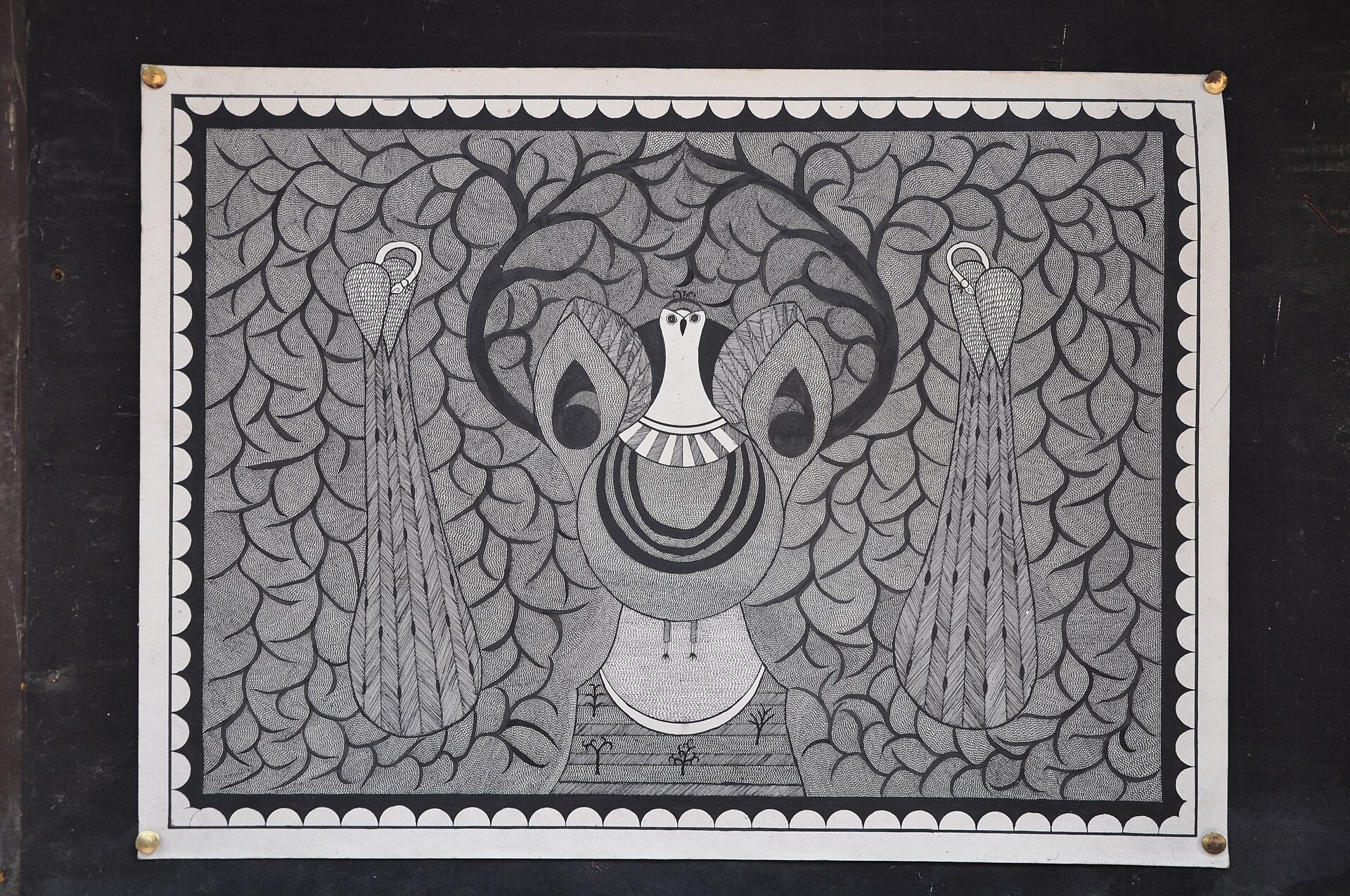
Top pick · Hand-painted original
Hand-painted Madhubani paintings on handmade paper
via iTokri · 211 single pieces by Hira Devi, Santosh Kumar Paswan and one other · Each listing names the artist, size and paper · 4 by 5 inches to 30 by 22 inches
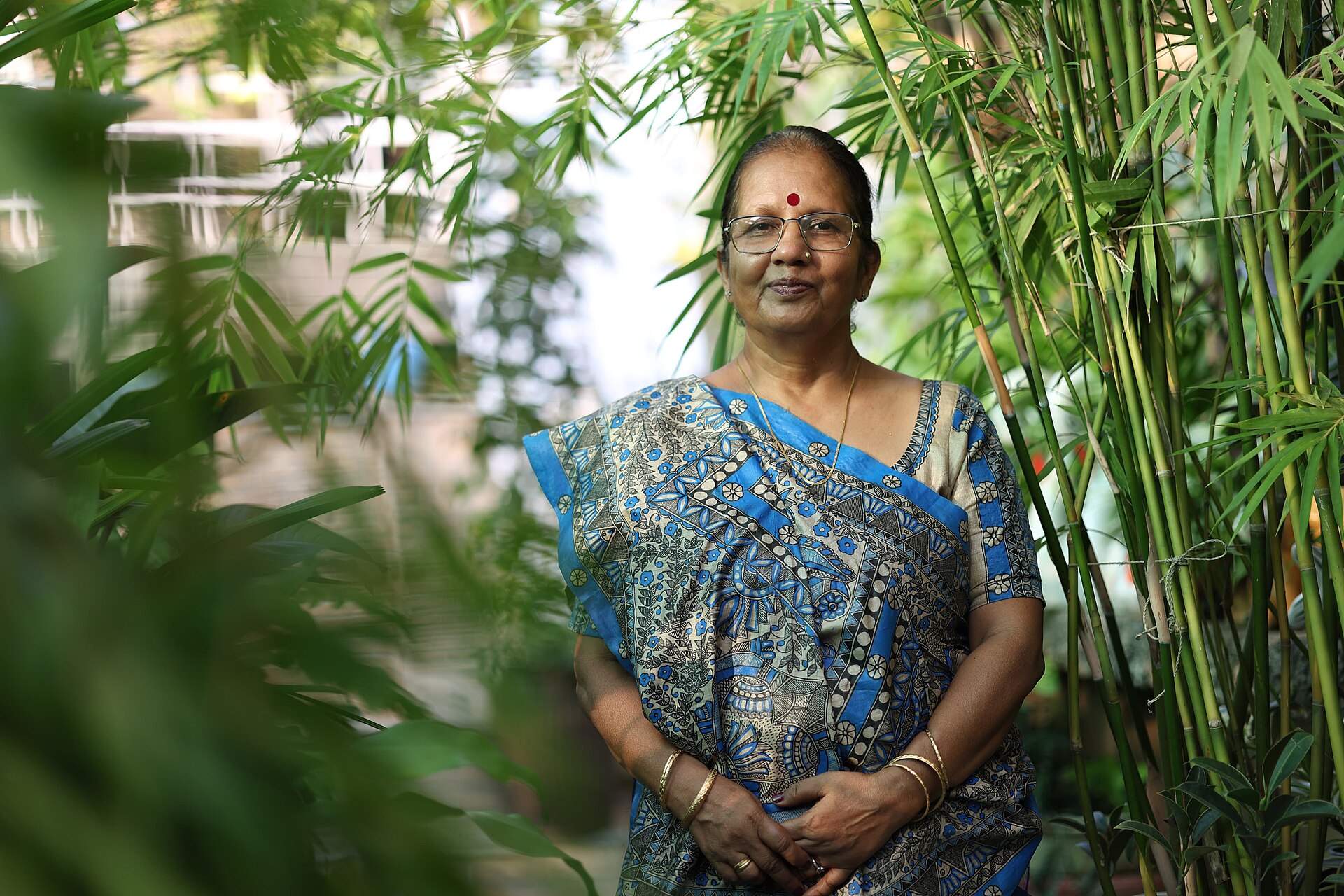
To wear · Hand-painted textile
Hira Devi hand-painted Madhubani dupatta, white
via iTokri · Chanderi silk and mercerised cotton with a zari border · Listing states hand-painted with fabric colours · Dry clean only · One piece left
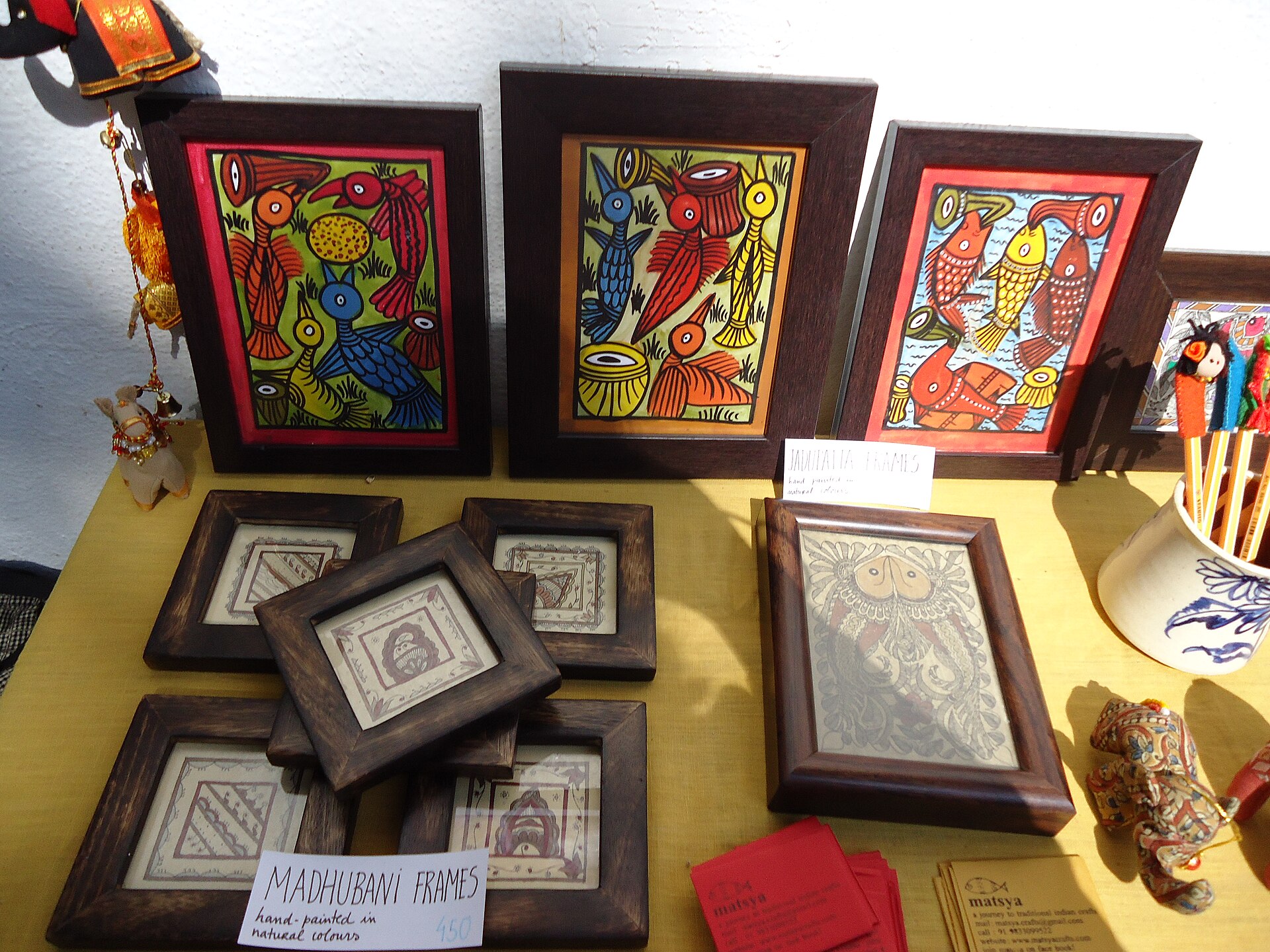
Affordable · Print decor
Madhubani wall art prints, framed
via Amazon India · Search results include posters and digital prints for decoration · Read each listing, since many say only "painting"
Caring for a Madhubani painting
The Library of Congress gives the same advice for any work on paper. Keep it out of direct or intense light, and give it as little light overall as you can. Hang or store it somewhere cool, fairly dry and stable, away from radiators and vents, and away from bathrooms, damp walls and other places where leaks and swings in humidity are likely.
Frame an original with an acid-free, lignin-free mat. Store an unframed piece flat in an acid-free, lignin-free folder, or rolled if it is too large to lie flat, and handle it with clean hands.
A hand-painted dupatta needs different care. iTokri's listing for the dupatta above says dry clean only.
Product-card images are representative photographs of the craft and do not show the exact listing. Product cards link to listings checked on 6 October 2026. Photos via Wikimedia Commons: Karan / Wikimedia Commons (CC BY-SA 4.0), Mohitkiran / Wikimedia Commons (CC BY-SA 3.0), Rohini / Wikimedia Commons (CC BY-SA 3.0).