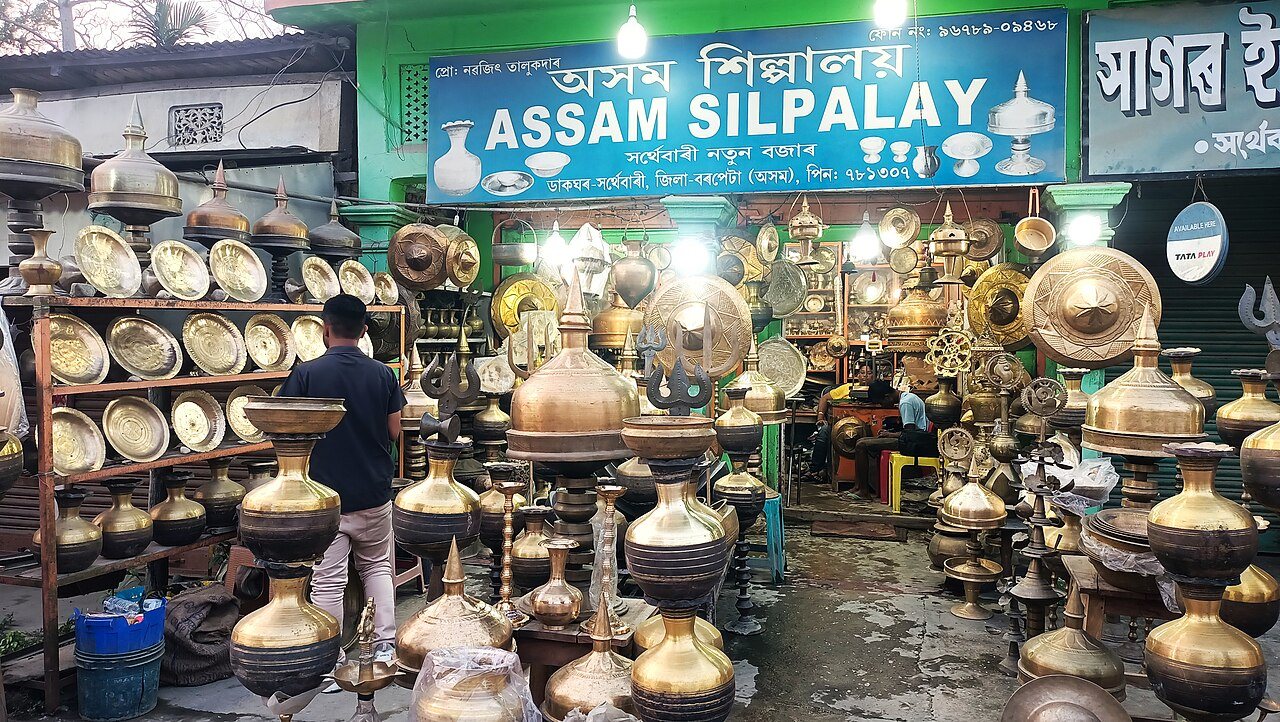
Indian home goods shops, online and offline, sell "brass" water bottles beside "copper" ones and "bell metal" thalis beside "bronze" statues, usually with no explanation of what the metals are or why their prices differ.
The difference matters in the kitchen. All three are copper or copper alloys, and the US Food and Drug Administration's Food Code says that "copper and copper alloys such as brass may not be used in contact with a FOOD that has a pH below 6 such as vinegar, fruit JUICE, or wine". The prices differ too. At P-TAL, which sells both, a five-piece kansa thali set costs ₹10,999 and a five-piece brass set costs ₹5,699, so kansa costs nearly twice as much there.
This guide covers what each metal is, the checks a buyer can make, what to use each one for, and how to clean it.
The three metals
Copper (tamba/tamra). An element. Britannica describes copper as "a reddish metal with very high ductility" and "an excellent conductor of heat and electricity". In 2021 the US Environmental Protection Agency registered copper alloys containing at least 95.6 percent copper with the claim that they kill certain viruses that come into contact with them. For drinking water there is one study. In 2012 Sudha and colleagues, in the Journal of Health, Population and Nutrition, added diarrhoea-causing bacteria to drinking water and stored it in copper pots for 16 hours, after which "no bacteria could be recovered". The copper in the water stayed within World Health Organization limits. That is a result about bacteria in stored water, and it does not show any other health effect.
Brass (pittal/peetal). An alloy of copper and zinc. Britannica says the zinc content varies and "is generally up to 45%", and attributes its long importance to "its hardness and workability". Brass is a copper alloy, so the FDA limit on sour food applies to it. Indian kitchens have long handled this with kalai, a tin lining. P-TAL's listing for its brass thali sets explains that brass katoris are silver inside because of "the tin coating which was traditionally called Kalai", applied "to keep it from reacting with sour things like curd, buttermilk etc."
Bell metal / kansa (kansya/kanchu). An alloy of copper and tin, which makes it a bronze. Britannica gives bell metal a tin content of 20 to 25 percent. A 2024 review in the Journal of Ayurveda and Integrated Medical Sciences gives the classical recipe as four parts copper to one part tin, dates kansya to the Samhita period of Ayurvedic literature, and records that "Kansya utensils were used for cooking practices". Makers sell kansa unlined. P-TAL says that because kansa already contains tin "it does not require tin coating or Kalai". Kansa is still a copper alloy, so the FDA limit on sour food covers it as well. Some sellers claim more. One Amazon kansa thali listing described itself as "Compatible with all kinds of food including curd and pickles", and we found no regulatory source that supports that.
How to tell them apart
The simplest tests:
- Colour. Britannica describes copper as reddish. If a bottle sold as copper is yellow, ask the seller what it is made of. For kansa, the classical texts summarised in the JAIMS review prefer kansya that is "Eshat Shayamalam (slightly grayish)" and reject kansya that is "Pittavarna (yellow in colour)".
- Weight. Weight will not separate kansa from brass. Engineering ToolBox lists brass at 8,400 to 8,730 kg/m³ and bronze with 8 to 14 percent tin at 7,400 to 8,900 kg/m³, so the ranges overlap. Pure copper, at 8,940 kg/m³, is the densest of the three.
- Sound. Bell metal takes its name from bells, and Britannica describes it as having a "sonorous quality when struck". The JAIMS review lists "Teekshana Shabdam (sharp sound)" among the signs of good kansya. Tap a kansa plate and listen for that ring.
- Price. Kansa costs more than brass. At P-TAL a single 11-inch kansa thali costs ₹5,319, and the five-piece kansa set costs nearly twice the five-piece brass set.
- Magnet test. Copper, brass and bronze are not magnetic. Quicktest, which makes metal-testing kits, says that "if the item is magnetic, then it can't be copper / brass/ bronze". A piece a magnet sticks to is not solid copper, brass or kansa.
What to use for what
For drinking water: Copper is the traditional choice, and the Sudha study above is the evidence for storing water in it. Keep lemon water and other sour drinks out of it, because they fall under the same FDA limit. P-TAL sells a pure copper bottle, listed below.
For eating (thali, bowls, glasses): Kansa is the traditional choice, and makers sell it unlined. The FDA Food Code, written for food businesses in the US, would keep sour food off kansa entirely. If you follow the tradition and eat tamarind, tomato or curd dishes from kansa, keep the contact short and never store sour food in it. Brass thalis and katoris used for sour food need a kalai lining.
For cooking: Copper conducts heat well, and makers line copper and brass pans with tin so that food does not touch the bare metal. P-TAL says the tin lining on its copper frying pan lasts "between six and twelve months" of regular use, and its care notes say to renew the lining through kalai when it becomes worn. Unlined copper or brass should not touch sour food.
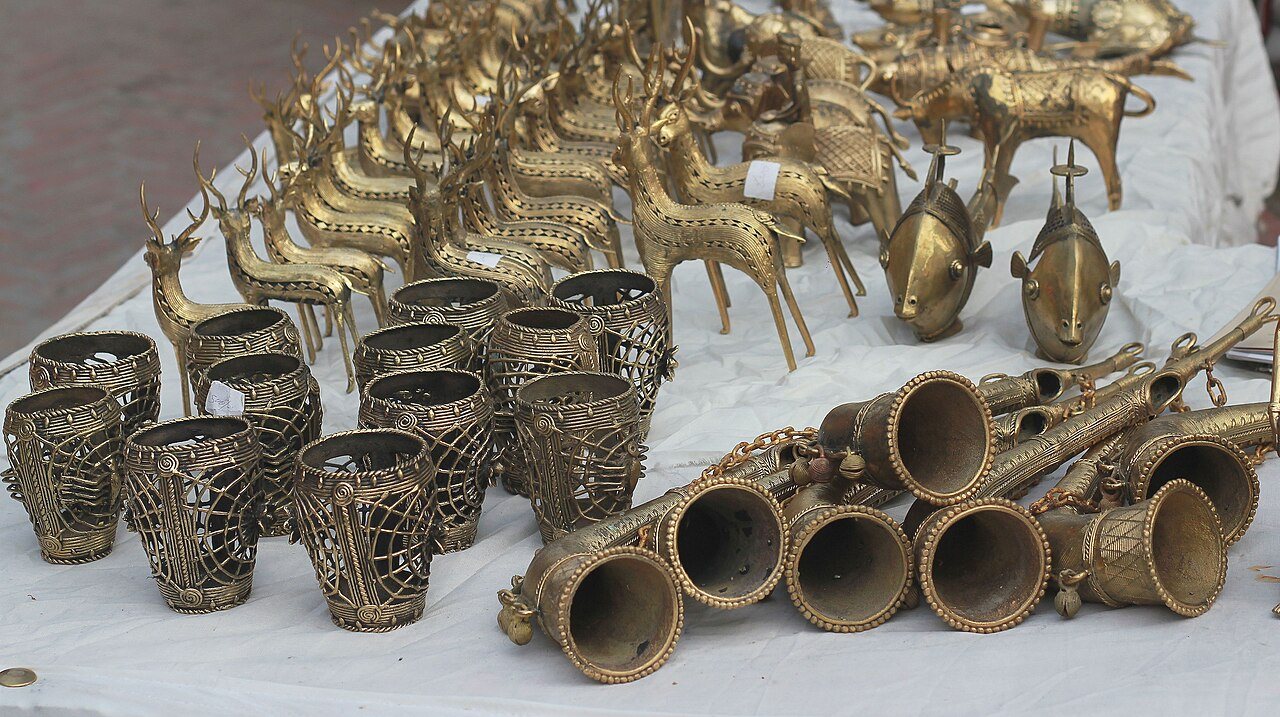
For décor: Food-safety rules do not matter for a piece that never touches food, so buy what you like the look of. iTokri describes its Odisha dokra figures as a "brass metal alloy" cast by the lost-wax method. Bidriware is a different alloy, which Tribes India describes as "a blend of zinc and copper, inlaid with pure silver and finished with a deep black oxidized surface".
Specific picks
Copper · Drinking
Copper water bottle, 1 litre
via P-TAL · Pure copper · Hand-hammered · Cork-finished cap
Kansa · Eating
Kansa dinner thaali, 11 inch
via P-TAL · Copper and tin alloy · About 800 g · Sold without kalai
Brass · Décor
Dokra figures from Odisha
via iTokri · Brass alloy · Lost-wax cast · See our full guide
Bidri alloy · Décor
Bidriware box with silver wire inlay, Bidar
via Tribes India · Zinc and copper alloy with pure silver inlay · 11 × 8 × 3 cm · Listed as a GI product
Care by metal type
Copper: Britannica notes that copper exposed to air for long periods forms "a thin green protective coating (patina)". P-TAL's care note for its copper bottle is to wash it with mild soap and a soft sponge, avoid steel wool, restore the shine with a scrub of atta, salt and lemon, and dry it straight away.
Brass: P-TAL sells a de-oxidising cleaner for copper and brass. On tin-lined pieces, P-TAL's care notes say to "Avoid steel wool, metal tools, and abrasive scrubbers on the lining", and to have the kalai redone when it wears. For dokra pieces, iTokri says brass and copper "naturally develop a patina over time" and that many people consider this desirable, so you can leave it alone.
Kansa: P-TAL says kansa "does not require any major cleaning efforts" and that its colour improves with each wash. Wash it with mild soap and dry it after use, as you would the other two metals.