Pashmina is the undercoat of the Changthangi goat. The goats shed it each spring, the fibre is combed off by hand, and one goat gives about 80 to 170 grams. The Changpa, a semi-nomadic community of Ladakh and the Changthang plateau, harvest the raw fibre. Middlemen sell it to Kashmiri weavers, who clean, comb and sort it by fineness, spin it by hand and weave it on handlooms.
What pashmina is and who makes it
The fibre is 12 to 16 microns across, against 12 to 21 for cashmere in general. A Bureau of Indian Standards article puts Changthang pashmina from Ladakh at 12.5 to 14 microns. That fineness is the reason for the hand spinning. A professor at Srinagar's Craft Development Institute told FactorDaily that real pashmina fibre is too fine to be machine-spun. A plain 70 by 200 cm stole takes about 180 hours to make.
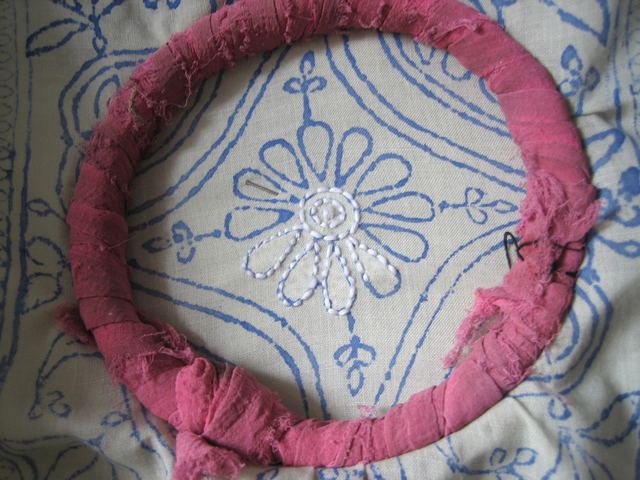
Kashmir's best-known pashmina shawls are of two kinds. The kani shawl is woven on a loom with small wooden bobbins called kanis, each wound with a single colour, and it takes its name from Kanihama in the Kashmir Valley. A sozni shawl is a woven pashmina with needle embroidery worked over it. Patterned Kashmir shawls could take up to 18 months to make, according to Wikipedia.
The word itself covers a lot of ground. Wikipedia notes that pashmina is also used for a blend of cashmere and silk, and that some companies have sold viscose under the name. The Bureau of Indian Standards published IS 17269 in 2019, covering identification, labelling and marking of pashmina products, including pashmina blended with silk, sheep wool, viscose or synthetics such as nylon, polyester and acrylic.
Telling real pashmina from imitations
Imitations come in several grades. Drishti IAS reports that supply is limited and prices are high, so manufacturers mix pashmina with sheep wool or ultra-fine merino. Fake makers, according to the FactorDaily report, blend nylon into lower-grade wool from Mongolia and China so that it survives a spinning machine, and the Craft Development Institute professor said the wool then shrinks and separates from the nylon after three or four years, especially after washing. Machine weaving is a separate problem. The BIS article says a handmade shawl can take more than a month, and a power loom can turn out one every fifteen minutes.
The home tests have limits that sellers and independent write-ups both state.
- Burn test. A Kashmir seller writes that natural fibre smells like burnt hair and leaves crushable ash, while synthetics smell chemical and leave a hard bead. The same seller says the test separates natural from synthetic fibre but cannot tell pashmina from cashmere, wool or a cashmere blend. Another seller says it is best left to professionals or certified labs.
- Ring test. The shawl is pulled through a finger ring. Purekashmir calls it misleading, because it measures the size of the folded fabric and says nothing about fibre. A thin synthetic can pass and a dense large shawl can fail.
- Feel and warmth. Viscose can be very soft, and the same seller says good blends can feel like pure cashmere even to experienced buyers.
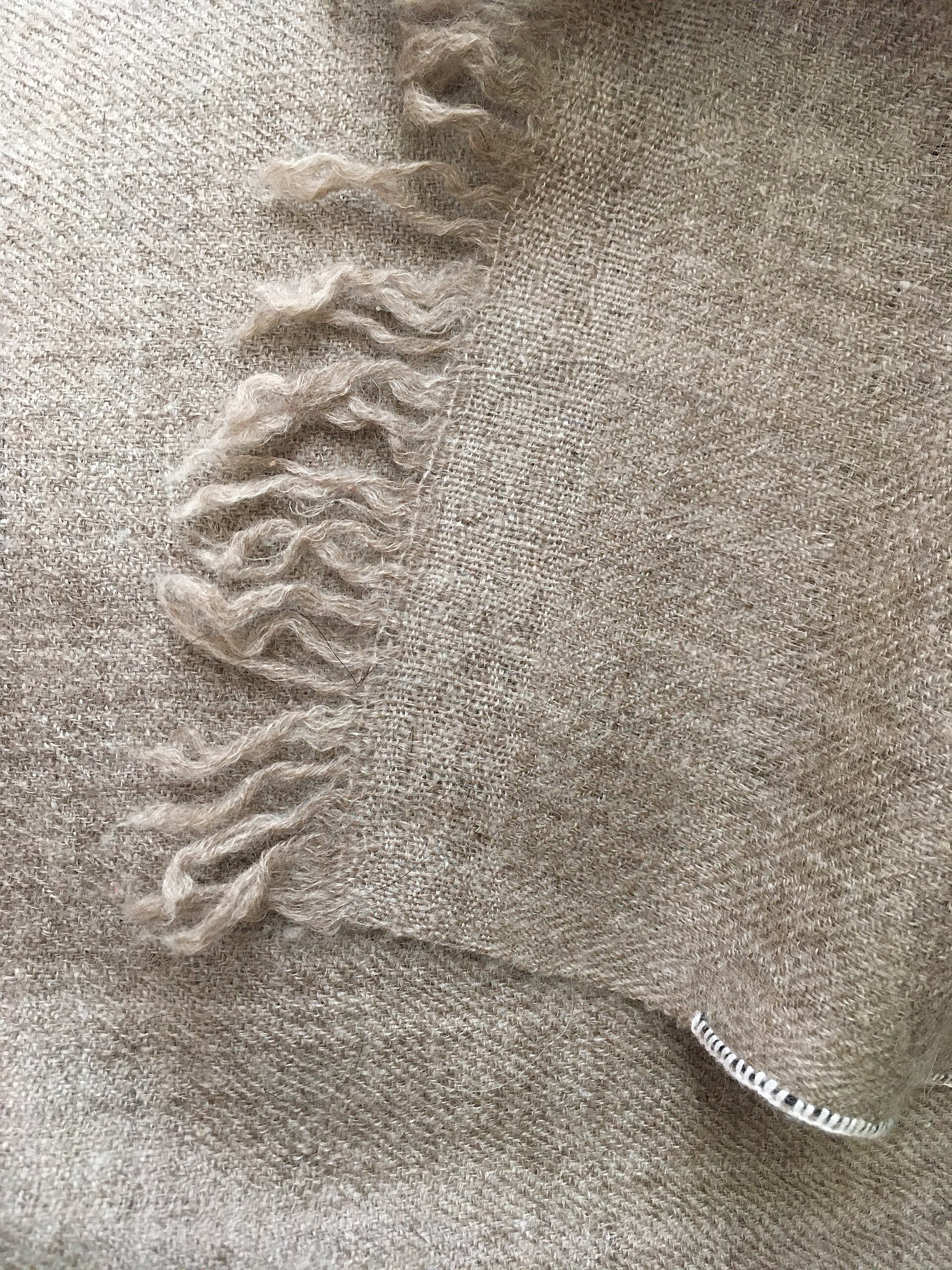
- Weave. The Kepra guide says hand-woven pashmina shows slight slubs and small misalignments, and machine-woven copies look uniform.
- Laboratory certificate. The Purekashmir guide calls a laboratory certificate the only definitive proof. In Srinagar the Pashmina Testing and Quality Certification Centre does this work for the GI label.
What the GI tag and its label certify
A GI label is the strongest evidence a buyer can get, and it covers more than origin. According to a seller authorised to use it, the specification is 100 per cent pashm from the Changthangi goat, fineness up to 16 microns, hand-spun yarn, handwoven on traditional wooden looms by registered Jammu and Kashmir artisans. Drishti IAS reports the same conditions. The Pashmina Testing and Quality Certification Centre checks whether the yarn is hand-spun or machine-spun and whether the shawl is hand-woven or machine-made, FactorDaily reported in 2017, and a high-resolution digital microscope was installed there in 2025, with a stated capacity of 100 to 120 products a day.
The label carries a unique number. ETV Bharat reports that QR-code tagging gives details of the manufacturer, weaver, place and raw material. Scan it, and check the number on the official site. A 2023 Daily Excelsior article by a law scholar found only 789 pashmina artisans registered as authorised users and said no state law forbids weaving pashmina on power looms, and that the terminology for what may be called pashmina is not defined. The registry page we read on 26 October 2026 lists 1,662 authorised users, a larger number than the article's.
GI status
Kashmir Pashmina is a registered Geographical Indication. The registry record (application No. 46) names TAHAFUZ as the applicant, shows a filing date of 9 December 2005 and certificate No. 97, and lists 1,662 authorised users (read on 26 October 2026). The validity date on the record, 8 December 2025, has passed. A renewal document dated 30 June 2025 is listed, and we could not confirm from the page that the renewal was granted. Kani Shawl is a separate GI, application No. 51, filed on 13 February 2006, with certificate No. 83 dated 27 November 2008 and validity shown to 12 February 2036 (registry record read on 26 October 2026). Check the registration details on the Geographical Indications Registry's own search, because sellers quote different dates. A label belongs on a shawl made in Kashmir by a registered artisan. It says nothing about shawls made elsewhere.
What it costs and where to buy
A plain stole takes about 180 hours and a goat sheds about 80 to 170 grams of fibre, so a very low price needs an explanation. Seller figures show where the market sits. Of the 14 listings shown on Kepra's GI collection page, the lowest is a sozni stole at ₹25,500 and the others run from ₹29,200 to ₹360,000 (listings read in October 2026). Kepra's authentication guide says real stoles start at ₹8,000 to ₹12,000, a figure it gives with no source. Purekashmir puts the floor for a plain stole bought direct from a maker at around $100 to 130.
Two listings from Kepra, the seller whose GI page this guide cites, read on 26 October 2026. Both say GI certified, and neither gives the label number or names the weaver, so ask for the number and check it as described above. Both are dry clean only and ship within 48 hours according to the listings. The prices sit inside the range in the paragraph above.
Top Pick · Sozni stole
Green Pashmina hashidaar sozni stole
via Kepra · About 70 x 200 cm · Sozni embroidered border · Listing says GI certified · Weaver not named
Shawl
Emerald Green GI Pashmina hashidaar sozni shawl
via Kepra · About 100 x 200 cm · Sozni embroidered border · Listing says 100 per cent pure Kashmiri pashmina · Weaver not named
The Daily Excelsior article says artisans' incomes can be as low as $1 a day, and that experienced artisans are leaving for hard labour or street selling. Buying from a named weaver or cooperative gives you someone to ask about the label and the lab report. A marketplace listing can be accurate, and the same checks apply to it: the label number, the lab report if the seller offers one, and a named maker. Be wary of phrases such as "pashmina blend" or "pashmina feel", which Purekashmir describes as legal cover terms that may contain very little pashmina, or none.
Looking after pashmina
- Wash by hand in cold water. Shahkaar advises a pH-neutral, mild shampoo or wool detergent, a short soak of about five minutes, a slow rinse and no rubbing or twisting.
- Dry it flat in shade. Press the water out with a clean towel and skip the dryer and direct sun.
- Store it folded. Use a breathable cotton bag, never plastic, which can trap moisture and lead to mildew.
- Keep moth repellents next to the bag. Shahkaar suggests lavender, dried neem leaves or cedar blocks placed beside the pouch.
- Iron on the lowest setting. Put a cotton cloth between the iron and the shawl, and skip steam.
- Take stains to a cleaner who handles delicate cloth. Embroidered shawls in particular need one.
Hero image is a representative photo via Wikimedia Commons.