In January 1993 Joel Waldfogel, then an economist at Yale, asked 86 students in an intermediate microeconomics class about the presents they had received the month before. He wanted two numbers for each student: what the givers had paid in all, and what the student would have been willing to pay for the same things. The givers had paid an average of $438. The students would have paid $313, which is 71.5 per cent of the price. Waldfogel published the result in the American Economic Review that December under the title that has followed it ever since, "The Deadweight Loss of Christmas".
The reasoning is ordinary consumer theory. A sum of cash lets the recipient buy whatever she values most, so a present bought with the same sum can at best match it and usually falls short. The shortfall is the deadweight loss. In March 1993 Waldfogel ran a second survey, of 58 students reporting on 278 gifts, and asked a different question: how much cash would you accept in place of the gift. That version gave 90.8 per cent. From the two surveys he concluded that holiday giving "destroys between 10 percent and a third of the value of gifts", and put the loss for the United States in 1992 at between $4 billion and $13 billion.
Who gives badly, and who gives cash
The most useful table in the paper sorts the gifts by who gave them. Gifts from friends were valued at 98.8 per cent of what they cost and gifts from partners at 91.7 per cent. Gifts from parents and siblings came to about 86 per cent. Gifts from aunts and uncles came to 64.4 per cent, and gifts from grandparents to 62.9 per cent. The further the giver lives from the recipient's daily wants, the more of the money goes on something the recipient would not have bought.
The same table shows who gives cash. About 42 per cent of the grandparents' gifts were cash or gift certificates, against 14.3 per cent from aunts and uncles and none at all from partners. Waldfogel wrote that the stigma attached to cash "seems to have dissipated where it would be most destructive: grandparents, aunts, and uncles are most willing to give cash." The grandparent who presses a note into a fourteen-year-old's hand at Diwali is doing what the model predicts. Both of them know she would not have guessed right.
What the replies found
The paper drew comments in the same journal. Three are worth knowing. Sara Solnick and David Hemenway (1996) argued that Yale economics students were an unusual sample, and with a larger sample and a different method they reported that more than half of their respondents valued their gifts above the retail price. John List and Jason Shogren (1998) objected that every estimate so far rested on hypothetical answers. They valued gifts in a demand-revealing auction, where a bidder does best by stating what the thing is worth to her, and found a gain from gift-giving. Bradley Ruffle and Orit Tykocinski (2000) showed that the answers moved with the wording of the question. Bruegel's summary of the exchange is a fair short guide to it.
More than thirty years on, the sign of the effect depends on how it is measured. That is a reasonable outcome for a question about something people do for reasons other than consumption, and Waldfogel saw it coming. He noted that the giver may get satisfaction from choosing a particular present, and that the losses he measured could be read as the price of that satisfaction.
What Mauss said a gift is doing
Marcel Mauss began from the other end. In his "Essai sur le don", published in L'Année sociologique in 1925, a gift is never free. It carries three obligations: to give, to receive and to give back. Refusing a gift, or failing to return one, says something about the relationship, and the exchange keeps the relationship going because the account between the two households is never quite settled. Jane Guyer's annotated translation is the most readable English edition.
On this reading the value of a Diwali gift to the person who receives it is a small part of what the gift is for. The larger part is the record it keeps of who visited whom, who brought what last year, and who now owes a visit. Waldfogel's survey measures the first part well and cannot see the second.
Why the box of dry fruit survives
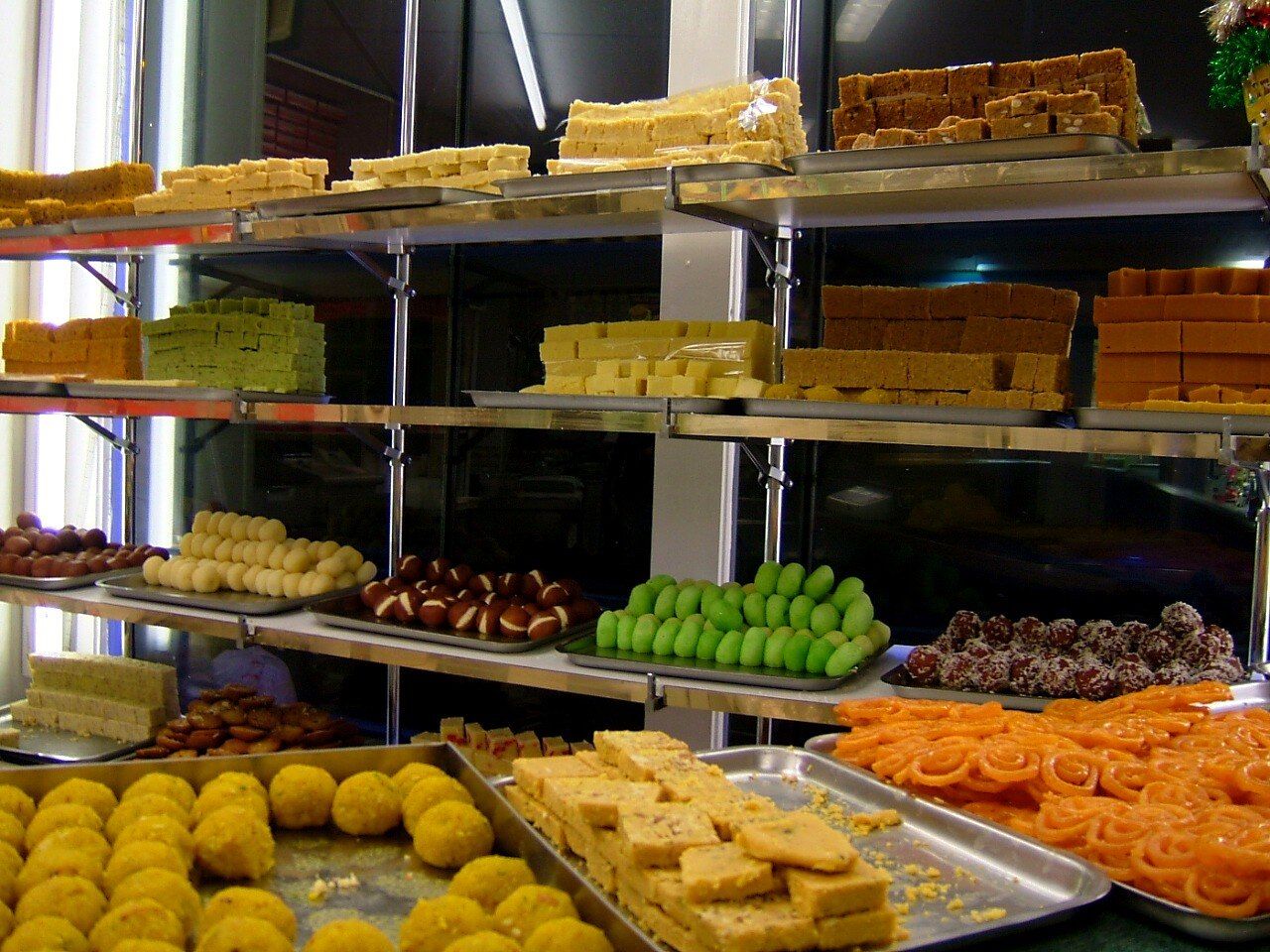
The box of almonds, cashews and raisins that goes from house to house every October and November ought to fail Waldfogel's test. It is bought with little thought about the recipient, it is often close to a copy of the box the recipient bought for someone else, and it can be passed on unopened. As an exchange it works better than it looks. It offends nobody, it keeps for months, its price is roughly known to both sides, and almost every household eats almonds, so the gap between what it cost and what it is worth to the recipient stays small. When it is passed on, the second giver loses nothing, which is more than can be said for most presents. A box of sweets does the same work for a shorter time.
Read through Mauss, the box is close to an ideal object. It carries the obligation cleanly, it can be matched in kind, and neither side has to guess at the other's taste. Its weakness is that it says almost nothing about the giver.
What changes when someone made it
Waldfogel's measure is the recipient's own valuation of the object. A handmade gift adds two things that measure leaves out. The first is information. A Channapatna toy or a kansa bowl tells the recipient that the giver went looking, and looking costs the giver time in a way that cash does not. The second is that some of the money reaches a person whose name can be known, which matters to some givers and recipients and is worth checking before you buy.
Neither of these turns a poor choice into a good one. A Pattachitra scroll bought for someone who dislikes wall art is still a deadweight loss at the price of a scroll. The practical advice that follows is close to Waldfogel's own figures. Give cash, or a box that can travel on, to the people whose wants you cannot read. Keep the made object for the friends and partners you know well enough to choose for, which is where, in his tables, gifts kept almost all of their value.
Sources
- Joel Waldfogel, "The Deadweight Loss of Christmas", American Economic Review 83(5), December 1993, pp. 1328 to 1336. Survey figures from Table 1 (p. 1331), yields and cash shares by giver from Table 3 (p. 1333), the quotation on cash from p. 1335 and the 1992 estimate from p. 1336.
- Sara J. Solnick and David Hemenway, "The Deadweight Loss of Christmas: Comment", American Economic Review 86(5), December 1996, pp. 1299 to 1305
- John A. List and Jason F. Shogren, "The Deadweight Loss of Christmas: Comment", American Economic Review 88(5), December 1998, pp. 1350 to 1355
- Bradley J. Ruffle and Orit Tykocinski, "The Deadweight Loss of Christmas: Comment", American Economic Review 90(1), March 2000, pp. 319 to 324
- Silvia Merler, "The microeconomics of Christmas", Bruegel, 24 December 2018
- Marcel Mauss, The Gift, expanded edition, selected, annotated and translated by Jane I. Guyer, HAU Books, 2016